Your trusty wooden spoon stirs soup, scrapes browned bits, and somehow ends up tasting like last week’s garlic. It dries out, drinks in water, and picks up smells you’d rather forget. A tiny monthly ritual—rubbing in a touch of oil—quietly changes that. It keeps moisture on the surface, not inside the grain, and makes it harder for bacteria to hang around after you rinse. Simple, quick, and far more protective than it looks.
The spoon was scarred and honey-colored, with burn freckles that told its own kitchen story. She rubbed a few drops of oil onto the handle, the bowl, even the edge that always catches on the pot, working it like hand cream you don’t want to waste.

“Wood is like skin,” she said, tucking the spoon back where steam could kiss it. “If you keep it thirsty, it cracks and holds trouble.”
She was right.
Wood loves water—and that’s the problem
Raw wood is a sponge in slow motion. Each fiber and pore is ready to pull in water, broth, and the microscopic life that rides along. That’s great for trees, not so great for spoons. When your spoon soaks, the fibers swell, then shrink as it dries. Tiny micro-fissures form. Food residue gets lodged deeper. Rinsing helps, but those little channels can hang onto moisture longer than you think.

Researchers looking at cutting boards have shown how wood draws bacteria away from the surface, where many die off as the board dries. Spoons behave similarly but get dunked and re-wetted far more often. If the wood stays damp inside, bacteria can linger in the grain between washes. We’ve all had that moment when a spoon smells like onions hours after scrubbing. That odor is a hint: aromatic compounds—and sometimes microbes—have penetrated past the surface.
A thin coat of oil changes the rules. Oil is hydrophobic, so it fills those thirsty pores and slows the rush of water into the grain. Less water inside means fewer damp nooks where bacteria might hang around. It also smooths the surface microscopically, so food has less to cling to. Think of it as waterproofing your hiking boots: you’re not encasing them in plastic, you’re making rain bead and roll off instead of soaking your socks.
The once-a-month oil ritual
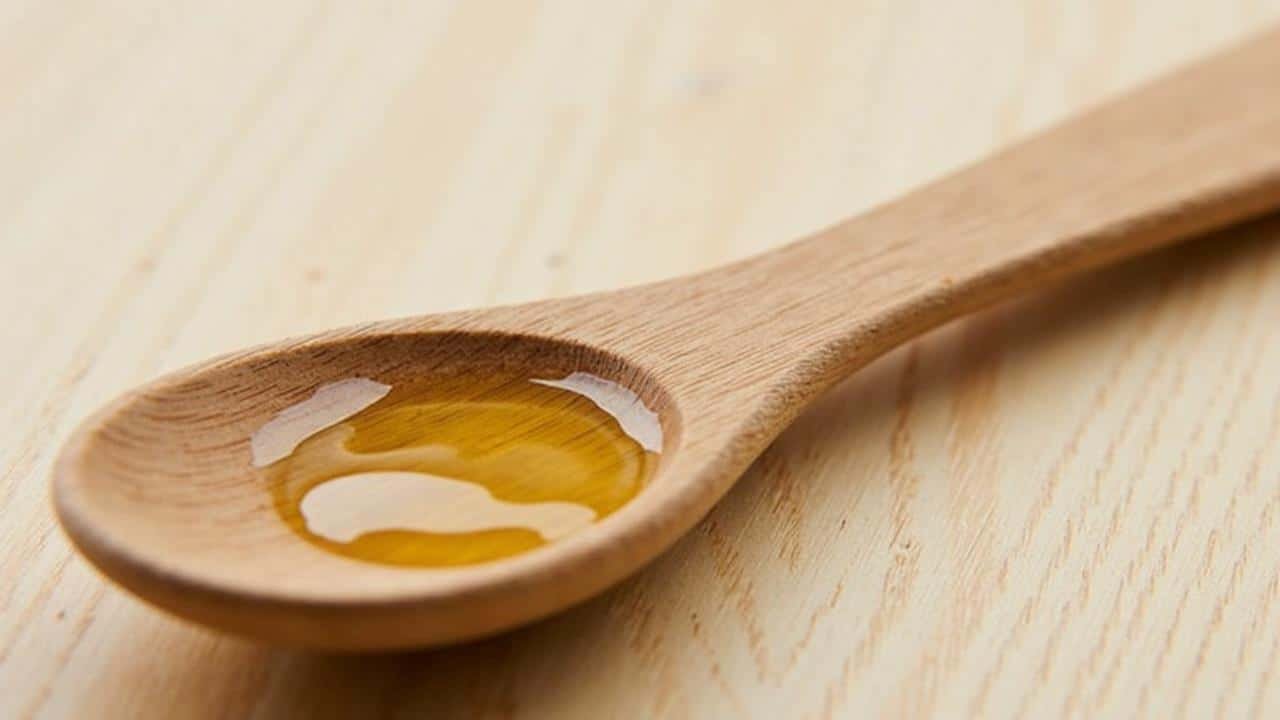
Here’s the method that takes five minutes and pays off all month. Wash your spoon in hot, soapy water, then dry it thoroughly with a towel. Warm the spoon slightly—rest it near a warm oven for two minutes or rub it in your hands. Add 5–10 drops of **food-safe mineral oil** or **fractionated coconut oil** to a soft cloth, then massage the spoon from handle to bowl, especially along the edge that scrapes your pans. Let the oil sit for 20 minutes, wipe off any excess, and stand the spoon upright overnight.

Do it once a month, or any time the wood looks chalky or feels rough. If your spoon has blade-like fuzz on the surface, sand lightly with a fine grit (320) before oiling. Skip olive oil, canola, or walnut oil—they can go rancid and leave a sticky film. Mineral oil doesn’t oxidize, and fractionated coconut oil stays liquid and stable. Soyons honnêtes: nobody actually does that every day. Monthly is realistic, and the spoon will tell you when it’s thirsty.
Common pitfalls are sneaky and fixable. Don’t soak wooden spoons in the sink; standing water swells the grain and makes it harder to dry inside. Avoid the dishwasher—heat and detergent are a one-two punch that warps, splits, and strips oil. If your spoon darkens from turmeric or tomatoes, that’s cosmetic, not a hygiene red flag. If it smells funky even after washing and drying, that’s your sign to refresh with a deep clean and an oil rub.
“Oil doesn’t sterilize wood. It helps it dry faster and stay smoother—two quiet things that make life harder for lingering bacteria.”
- What to use: food-safe mineral oil or fractionated coconut oil
- How often: monthly, or when the wood looks dull
- Prep step: wash, dry, and warm the spoon slightly
- Bonus care: a quick sand if the grain feels rough
Why this tiny habit keeps paying you back
Bacteria love moisture, nutrients, and time. The oil ritual quietly attacks the first two. When wood is oiled, water stays closer to the surface and evaporates faster after washing. Fewer micro-cracks mean less residue trapped beyond reach, so your everyday wash actually resets the spoon instead of just polishing the outer layer. Clean-dry-oil creates a cycle that favors dryness, not dampness.
There’s also the grain story. Beech, maple, and olive wood are common for spoons because they’re tight-grained and naturally low in resin. Some species carry mild antimicrobial compounds. You don’t need a botany degree to benefit. Oiling complements those modest defenses by sealing pathways, preventing swelling, and keeping the surface slick enough that garlic paste and egg yolk don’t glue themselves into the fibers. The spoon ages gracefully instead of going fuzzy and scarred.
Think of the economics: a spoon can last decades if you treat it like a cast-iron skillet—clean, dry, condition. The payoff is flavor-neutral cooking and fewer “why does this smell weird?” moments. It’s not about perfection. It’s about a simple **monthly habit** that fits into a real kitchen where dinner happens fast, kids ask questions, and the sink fills quicker than you’d like.
A small ritual that spreads through a kitchen
There’s something grounding about ending the month with a towel, a bottle of oil, and the tools that feed people you love. You wipe, you rub, the wood drinks, and tomorrow’s soup will taste like itself. Maybe you start with the spoon, then do the salad tongs, the butcher-block edge, the old rolling pin you found at a yard sale. A kitchen becomes calmer when its tools feel ready.
| Point clé | Détail | Intérêt pour le lecteur |
|---|---|---|
| Oil blocks water | Hydrophobic layer fills pores and slows absorption | Less moisture trapped where bacteria might linger |
| Smoother surface | Oil reduces micro-fissures and grain fuzz | Easier cleaning and fewer odors after washing |
| Right product matters | Use mineral or fractionated coconut oil; skip cooking oils | No rancid smells, stable protection, better results |
FAQ :
- Can oiling replace proper washing?No. Wash with hot, soapy water first, dry thoroughly, then oil. Oil supports drying; it doesn’t sanitize.
- Which oil is safest?Food-grade mineral oil is the classic. **Fractionated coconut oil** is another stable, scent-free option.
- How do I fix a rough, splintery spoon?Sand lightly with 220–320 grit along the grain, wipe dust, then apply oil and let it drink for 20 minutes.
- What if my spoon smells bad?Rub with coarse salt and lemon, rinse, dry completely, then oil. If deep cracks remain smelly, retire the spoon.
- Is wood really safer than plastic?Studies on cutting boards show wood can pull bacteria into the grain where many die as it dries. Keeping wood dry and oiled supports that advantage.