The bathroom looks clean, yet it can smell tired. Steam hangs around. Towels don’t fully dry. And that faint, sour “moist” odor sneaks back by night. Here’s the tiny, slightly odd trick that quietly fixes it without perfume clouds or plug-ins.

The bathroom felt sticky after every shower, and the air grew that damp, old-laundry smell by morning. We’ve all had that moment where you crack the door and the room greets you with a stale wave, even though the tiles gleam.
Then a neighbor handed me a cotton ball that smelled like a clean forest. She said, “Hide this behind the mirror.” I didn’t believe her. Next day, the room didn’t fight back. The smell was gone, like someone had turned down the humidity inside the air itself.
It wasn’t luck. It was chemistry. And it was tiny.
Why a tea tree–soaked cotton ball changes the bathroom “weather”

The magic ingredient is **tea tree oil**. A few drops on a cotton ball release slow, steady vapors that do two things at once: they scent lightly and push back against the microbes that love damp corners. Think shower grout, the underside of the bath mat, the seal around the toilet base. That’s where the funk begins.
Tea tree oil isn’t a new gadget. It’s an old-school extract packed with terpenes like terpinen-4-ol that make life hard for odor-making bacteria and mildew. *The scent is crisp, almost medicinal, and it fades into the room rather than shoving its way in.* You’re not masking with sugar or fruit. You’re changing the room’s baseline.
Here’s the simple chain: moisture lingers, microbes wake up, they metabolize, and their byproducts smell musty. A cotton ball increases surface area, so the oil evaporates slowly and evenly, touching the air you actually breathe. Those vapors disturb microbial growth on nearby surfaces and neutralize some of the stale notes. It doesn’t dry the room. It calms what’s causing the smell. Pair that with basic drying habits, and the difference becomes obvious.
How to use the cotton-ball method without overdoing it

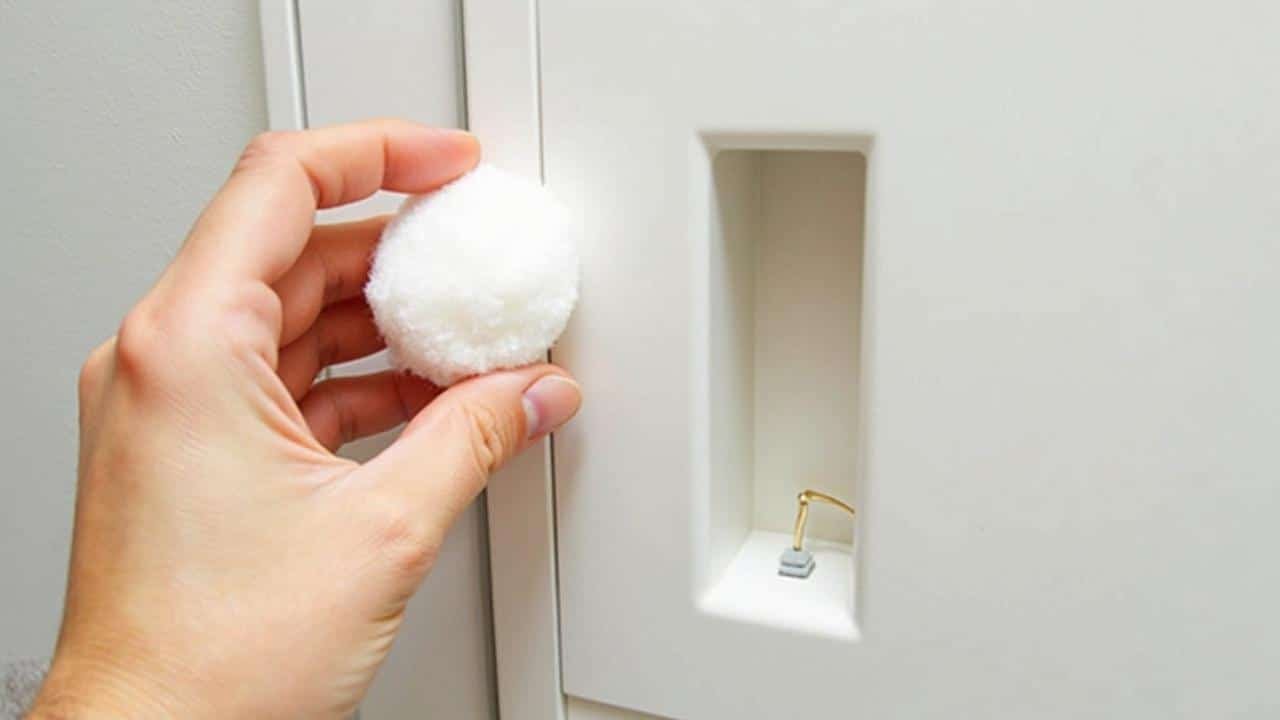
Start small. Place 3–5 drops of tea tree oil on a fresh cotton ball. Tuck it somewhere discreet: on a high shelf, behind the sink pedestal, or on the vanity lip near the mirror. Keep it out of splash zones and away from little hands or curious pets. One cotton ball covers a small bathroom. For a larger space, use two, far apart. Replace weekly, or when the scent fades to a whisper.
Resist the urge to drench the cotton. Strong oil can feel harsh and may irritate sensitive noses. If you’re wary of scent, combine the cotton ball with a small open jar of baking soda nearby to quietly absorb odors. Let the fan run after showers for at least 10 minutes. Let’s be honest: nobody really does this every day. Still, aim for most days, and the cotton ball won’t have to fight alone.
This trick won’t fix structural damp, but it steadies the room’s “microbiome.” That’s the point.
“Think of tea tree oil as a tiny bouncer at the door—polite, consistent, and hard on the troublemakers.”
- Use high-quality, 100% pure tea tree essential oil.
- Keep the cotton ball out of direct sunlight and splashes.
- If you have cats, dogs, or toddlers, place it up high and ventilate well.
- If the scent feels strong, cut to 1–2 drops and move it higher.
The science behind the scent—and why it works on “damp” smell
Bathrooms run humid. It’s common to see 60–80% after a hot shower, and that’s when mold and bacteria get chatty. Tea tree oil releases volatile compounds that disperse into that moist air. Those compounds disrupt cell membranes in the very organisms that turn humidity into odor. It’s like lowering the volume on a feedback loop.
There’s also the pacing. Cotton holds oil without flooding the space. It gives you a slow roll, not a spike. Over a few days, the room smells like itself again—tiles, soap, clean towel—without a heavy “perfume layer.” If you’re sensitive to fragrance, this matters because control is everything. One drop made too big can be too much. Two drops placed right can be ideal.
All that said, **ventilation still matters**. The cotton ball is the guitarist, not the whole band. Crack the door after showering. Hang towels apart. Squeeze the shower squeegee across glass and tile. These little moves cut the food supply for **mildew spores**, and the tea tree takes care of the leftover noise. Small habits chain together. That’s when a bathroom stops smelling like yesterday’s steam.
Putting it into practice—and making it your own
Pick your placement like you’re setting a hidden diffuser. Above the mirror ledge works. So does a nook on the toilet tank, behind a plant, or in a small dish near the fan intake. Add 3 drops to start, wait a day, then adjust by one drop at a time. Swap the cotton ball every 7–10 days, and give the spot a quick wipe. If your bathroom is windowless, run the exhaust fan while the door is slightly ajar to move the oil evenly through the room.
If tea tree feels too medicinal, blend one drop of lavender or lemon with it, not instead of it. You get the soft edges with the backbone intact. People often overcomplicate this: fancy diffusers, timed plugs, sprays by the hour. This is simpler. If the room smells strong right after you place it, move the cotton ball up high or behind the mirror frame. If you have respiratory sensitivities, go slow and keep the dose in the “barely-there” range.
Think safety and common sense, not fear. The oil shouldn’t touch skin or sit where it might drip into bath water.
“Treat essential oils like concentrated spices—use a pinch, not a ladle.”
- Test for a week before deciding your ideal drop count.
- Store the bottle capped, away from heat and sunlight.
- For homes with pets, favor higher placement and stronger airflow.
- Skip this method if anyone in the home has known sensitivity to tea tree.
What this tiny habit quietly solves
Odors from damp rooms aren’t a moral failing. They’re physics, biology, and a busy life swirling in a small tiled box. A cotton ball with tea tree oil is small enough to ignore, steady enough to matter. It won’t rebuild grout or fix a leaky seal, yet it buys back calm. The air feels younger. Towels smell like their own fibers again. Neighbors notice nothing, which is the point. You might, though, catch a glimpse of that quiet, forest-clean note and smile. The kind that says the room’s under control, and you didn’t even think about it today.
| Point clé | Détail | Intérêt pour le lecteur |
|---|---|---|
| Tea tree oil on cotton | 3–5 drops on a hidden cotton ball release steady vapors | Quick, low-cost, low-effort odor control |
| Microbe disruption | Terpenes interfere with odor-causing bacteria and mildew | Prevention, not just masking |
| Habit pairing | Fan on, towels spread, light squeegee use | Longer-lasting freshness with tiny daily moves |
FAQ :
- Can I use another oil instead of tea tree?Yes. Eucalyptus, clove, or lavender can help, though tea tree has a stronger anti-mildew profile. Start with fewer drops when switching oils.
- Is it safe around pets and kids?Keep the cotton ball out of reach and ventilate the room. Essential oils are potent. Avoid direct contact and don’t use if anyone is sensitive to the scent.
- Will this remove moisture?No. It targets the odor cycle linked to moisture. To reduce moisture, run the fan, open the door, and hang towels apart.
- How often should I replace the cotton ball?Every 7–10 days is typical. If the scent fades sooner, add 1–2 drops or replace the cotton.
- What if the smell is still strong?Check for hidden damp spots: shower curtain hem, under the bath mat, behind the toilet. Clean those, improve airflow, and keep the cotton ball method as your steady assist.