The ingredients inside are surprisingly familiar, even a bit old-school.

From TikTok trends to family traditions, sprigs of rosemary paired with coarse rock salt are quietly reshaping home routines. The promise is modest: lighter air, fewer musty whiffs, calmer rooms, and a touch of ritual that feels grounding.
What the jar actually does
Rock salt draws in moisture from the air, which helps curb humidity in small spots. Rosemary brings a bright, resinous scent and an impression of a cleaner, fresher space. Many households also value the jar as a symbolic reset, tied to long-standing beliefs about protection and purification. Whether you buy into the energy side or not, the practical side still holds up.
One jar won’t fix damp walls, but it can freshen a small room and take the edge off mild humidity and lingering smells.
How salt behaves indoors

Coarse salt is hygroscopic. It attracts water molecules, clumps as it absorbs them, and can help keep confined corners less clammy. Larger grains work slowly and last longer than fine table salt. When fully saturated, the salt cakes or forms brine at the bottom of the jar.
What rosemary contributes
Fresh rosemary releases volatile compounds that smell clean and piney, with notes driven by 1,8‑cineole and camphor. That aroma masks stale odours. Lab studies link rosemary oils with mild antimicrobial activity on surfaces, yet a room jar won’t act like a disinfectant. Think ambience and freshness, not sterilisation.
How to prepare it, step by step
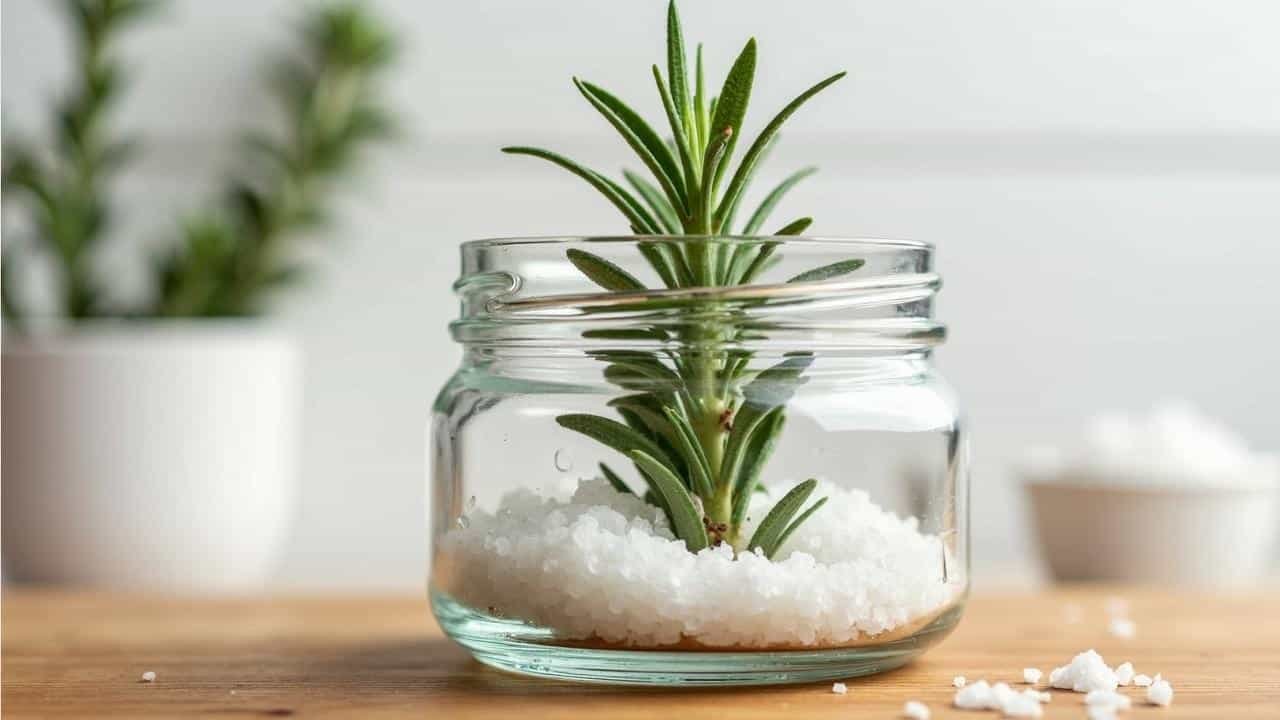
- Choose a clean, dry glass jar. A wide mouth helps you refresh it later.
- Pour in 200–300 g of coarse rock salt to cover the bottom by 2–3 cm.
- Tuck in 3–5 fresh rosemary sprigs. Alternate thin layers of salt and rosemary for a nicer look.
- Decide: leave the lid off to scent the room, or close it for stronger moisture control in a tight area.
- Optional: add a strip of lemon peel, or a single drop of rosemary essential oil on the salt for a stronger first-week scent.
| Jar type | Best for | Pros | Watch-outs |
|---|---|---|---|
| Open jar | Living rooms, hallways, desks | Better scent diffusion; easy to top up | Absorbs moisture slower; scent fades faster |
| Closed jar (with small holes) | Bathrooms, kitchens, closets | Improved moisture uptake; cleaner look | Weaker scent; check for brine accumulating |
Where to place it
Position shapes results. Air movement carries aroma and speeds moisture contact with the salt. Think about busy zones and problem corners rather than hiding the jar on a dead shelf.
- Near the front door or hallway table: sets a fresh tone as people arrive and leave.
- Living areas and corridors: keeps chatter-friendly spaces smelling cleaner during gatherings.
- Bathroom or kitchen: helps with steam and food odours, especially by a window that opens daily.
- Next to wardrobes and closets: discourages mustiness and keeps fabrics drier.
Place it where air moves: doorways, hallways, or a sill that gets a small daily breeze.

How long it lasts and when to replace
Expect the rosemary scent and the salt’s performance to peak in the first two to three weeks. In a typical home, the mix performs well for 30 to 45 days. Humid rooms shorten that window. Dry seasons extend it a little.
- Salt looks soaked or fully clumped: it has absorbed as much moisture as it can.
- Fragrance drops to near zero: swap in fresh sprigs or a new lemon peel.
- Any brine at the bottom: time to empty, dry the jar, and reload.
Care, safety and pet notes
- Keep out of reach of children and pets. Salt can harm pets if ingested. Glass breaks if knocked over.
- If the rosemary blackens or molds, humidity is too high. Discard the contents, wash the jar, and start again.
- Avoid splashing essential oils on skin or wood surfaces. One drop goes a long way in a small jar.
- Do not rely on the jar to address structural damp. Persistent damp needs ventilation fixes or a dehumidifier.
Does it really work? A quick home check
Run a simple test over a week. Put one jar on a bathroom shelf and another in a hallway. Drop a cheap humidity meter next to each. Note day-one readings, then check again on day seven. You can also weigh the salt before and after; any gain suggests moisture uptake. Record how the room smells at morning and evening. Those notes help you decide where the jar earns its keep.
Small upgrades that make a difference
- Mix in a spoon of baking soda for extra odour control in shoes cupboards.
- Swap fresh rosemary for dried sprigs if you live in a very humid area; they resist wilting longer.
- Use a perforated lid on bathroom jars to balance moisture control and safety.
- Combine with practical airflow: a five-minute window open after showers beats any jar alone.
- For serious damp corners, rotate in a small, low-wattage dehumidifier and keep the jar for scent.
What this trend says about home habits
The jar signals a shift toward easy, low-cost habits that nudge comfort without gadgets. It costs little, looks nice on a shelf, and invites small rituals: refresh the sprigs, clear the air, start the week. People report that the act of placing it by the door or the sink feels like drawing a line under the day.
If you want a numbers-first approach
Try this quick plan. Choose one target spot, like a wardrobe with a faint smell. Load 250 g of rock salt and four rosemary sprigs into a 500 ml jar. Place it near the back panel, not pressed against clothes. Check weekly for clumping and scent. If you see heavy brine after two weeks, add a second jar or move to a stronger remedy such as activated charcoal. If readings improve, stick with the schedule and refresh every 30 to 45 days.