Leftover basil turns black by Friday, parsley slumps in a jar, cilantro melts into the crisper abyss. The fix isn’t a gadget. It’s a shape that lives in your freezer and snaps like chocolate.

Inside: a thin, green sheet of chopped herbs suspended in olive oil, scored into neat squares with the end of a chopstick. She held the frozen bag with both hands and snapped off a tile for the pot.
Steam lifted, the room smelled like a June garden, and the tile dissolved in seconds. No rummaging for a bruised bunch. No guilt over that half-used parsley that always dies on Thursday.
She smiled the way people smile when they’ve found a modest, private shortcut. The shape matters.
The shape that changes your week

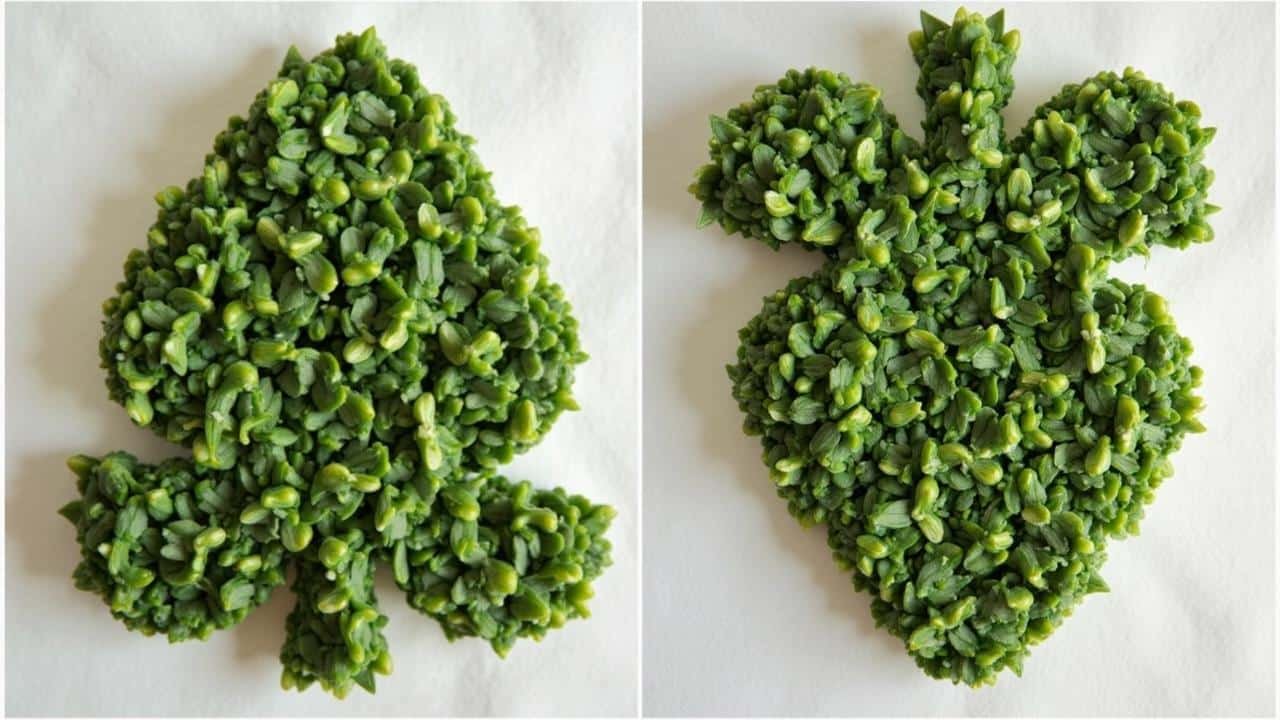
Not cubes. Not a chunky log. A thin, scored sheet you can break into tiles with your fingers. That’s the difference between a neat idea and a habit you’ll stick with.
Spread chopped herbs in a zip-top bag with a splash of oil or water, flatten to a uniform slab, then draw a grid with a chopstick before freezing. You get a ready-to-use **snap-and-sprinkle** stash that stacks flat and disappears into sauces, eggs, and soups.
Think of a weeknight sprint. Pasta boiling, toddler asking for grapes, a timer beeping. You grab the bag, crack off two squares of basil-oil, and drop them in a pan. Done in ten seconds, not ten minutes.

A friend, Maya, ran the math after months of doing this. She used to buy two bunches a week, often wasting half. At $2.99 a bunch, that’s roughly $150 a year just wilting away. Now she freezes leftovers and buys less.
She swears the real win isn’t only money. It’s the mental quiet of knowing flavor is always ready.
Why this shape over ice cubes? Surface area and speed. A thin sheet freezes faster, which reduces big ice crystals that shred delicate leaves. It thaws faster too, so your herbs don’t stew awkwardly while dinner waits.
You also get precise portioning. Each tile is a repeatable measure—about a tablespoon—so you build a recipe by feel. Less thaw time, fewer half-melted blocks, more control.
The freezer is a time machine for flavor. Flattened sheets also prevent those frosty, mysterious herb bricks that end up shoved to the back, saving both space and ingredients.
How to make the thin, scored sheet
Wash, spin dry, and finely chop your herbs. Soft herbs (basil, cilantro, parsley, dill) love oil; sturdier ones (rosemary, thyme, sage) can go in water or oil. Mix 2 cups chopped herbs with 1/3 cup olive oil for a spoonable paste.
Scoop the mixture into a quart zip-top freezer bag, press out the air, then flatten with a rolling pin or a glass to about 1/4 inch thick. Lay the bag flat on a sheet pan and score a grid with the handle of a spoon or a chopstick. Freeze flat. Label with herb, medium, and date.
Defrost by snapping off what you need straight into the pan or bowl. Basil-oil tiles melt into hot pasta and simmering soups; parsley-water tiles brighten grain salads and dressings.
Common slips happen. People add too much oil and end up with greasy tiles, or pack leaves wet and get ice burn. Dry your herbs well and keep the slab thin so it freezes fast.
We’ve all had that moment when the herbs droop before you even find a recipe. Move the leftovers straight to the sheet after your first meal, while the board is already out. Let’s be honest: nobody actually does that every day, so make it easy—stash a clean bag alongside your cutting board.
Choose your medium with your future self in mind. Use neutral oil for flexibility, olive oil for Mediterranean dishes, or water for lighter cooking. That tiny choice guides flavor all week.
“The sheet is the secret,” says Lina, a meal-prep cook who sells out every Sunday. “Cubes live in your freezer. Sheets live in your routine.”
- Best for oil: basil, cilantro, parsley, dill, chives
- Best for water: parsley, cilantro, mint, tarragon
- Try blends: parsley–dill–lemon zest for fish; cilantro–mint–lime for tacos
- Score smaller for dressings, larger for soups
- Label clearly: herb + oil/water + date + “1 tile = 1 Tbsp”
A small ritual, big payoff
This is about shaping time as much as shaping herbs. You spend two extra minutes after dinner flattening a bag, and you buy back countless little moments later—when the soup needs brightness, or the omelet is begging for freshness.
It’s also about waste you don’t see. Every limp sprig you toss is money, water, and farm work lost. Turn the leftovers into a tidy green bank you can withdraw from any night of the year.
The discards shrink. The cooking grows. And you quietly become the person who always has fresh flavor on hand—not because you shop more, but because you made room in your freezer for a **thin, scored sheet** that respects your week and your wallet.
| Point clé | Détail | Intérêt pour le lecteur |
|---|---|---|
| Sheet, not cubes | Thin, scored slab snaps into tablespoon tiles | Faster freezing, quicker melting, precise portions |
| Oil or water pairing | Oil for soft herbs and sautéing; water for light dishes | Better texture, flavor control across recipes |
| Stack and label smart | Flat bags stack neatly; add date and “1 tile = 1 Tbsp” | Zero guesswork, zero waste, **waste less, cook faster** |
FAQ :
- Which herbs work best for the thin sheet?Soft herbs like basil, cilantro, parsley, dill, and chives give great results. Sturdy herbs like rosemary, thyme, and sage can be minced very fine and mixed into oil or water for milder release.
- Oil or water—how do I choose?Use olive or neutral oil when you’ll cook the tile in a pan or swirl it into hot dishes. Use water for dressings, grains, cocktails, or when you want pure herb flavor without added fat.
- How long do the sheets keep?Up to 3–4 months for peak flavor in a cold freezer. They’re safe longer, but aroma fades. Keep bags flat and sealed to avoid freezer burn.
- Can I include garlic or citrus zest?Yes. Add minced garlic or zest to the mix for ready-made flavor bases. Keep garlic-containing tiles frozen solid and drop straight into hot cooking; don’t thaw at room temp.
- What if I don’t have zip-top bags?Use a shallow silicone bag or a parchment-lined tray. Freeze the thin slab, then break into pieces and store in a container with parchment between layers.