If your bathroom smells clean but your towels still carry that faint wet-dog note, the culprit might not be your detergent. It might be the way you fold and hang them. There’s a simple, specific fold that changes how air moves through the fabric — and that changes everything.

I’d washed it two days earlier. The flat, neat square I’d learned to fold in college looked good on the shelf, yet the center was still damp hours later. That smell didn’t come from dirt. It came from trapped moisture and time.
On a whim, I tried something different: a loose, open fold with gaps where air could snake through. Same towel. Same bathroom. The next day it was light and crisp, the scent of clean cotton instead of a foggy locker room. The fold changed everything.
The science hiding in a towel fold
Towels aren’t smooth. They’re tiny forests of loops, and those loops hold water between fibers. When you pack those loops tight — think tidy squares or spa rolls — you decrease airflow and create pockets where moisture lingers. That’s where the musty note begins.

Air is your friend. When a towel has channels and edges exposed, warm air can move through the fabric instead of around it. Evaporation speeds up. The outer layer dries, then the inner layer follows, not the other way around. A small tweak in shape shifts the whole drying journey.
We’ve all lived that moment when you grab a towel and it’s somehow both “clean” and a little swampy. That smell is the whisper of microbes waking up in damp cotton. Give them less time to party and they don’t multiply. More air, more surface area, fewer damp hours. It sounds almost too simple. It isn’t.
The open-edge Z-fold: the quick method that makes towels dry faster
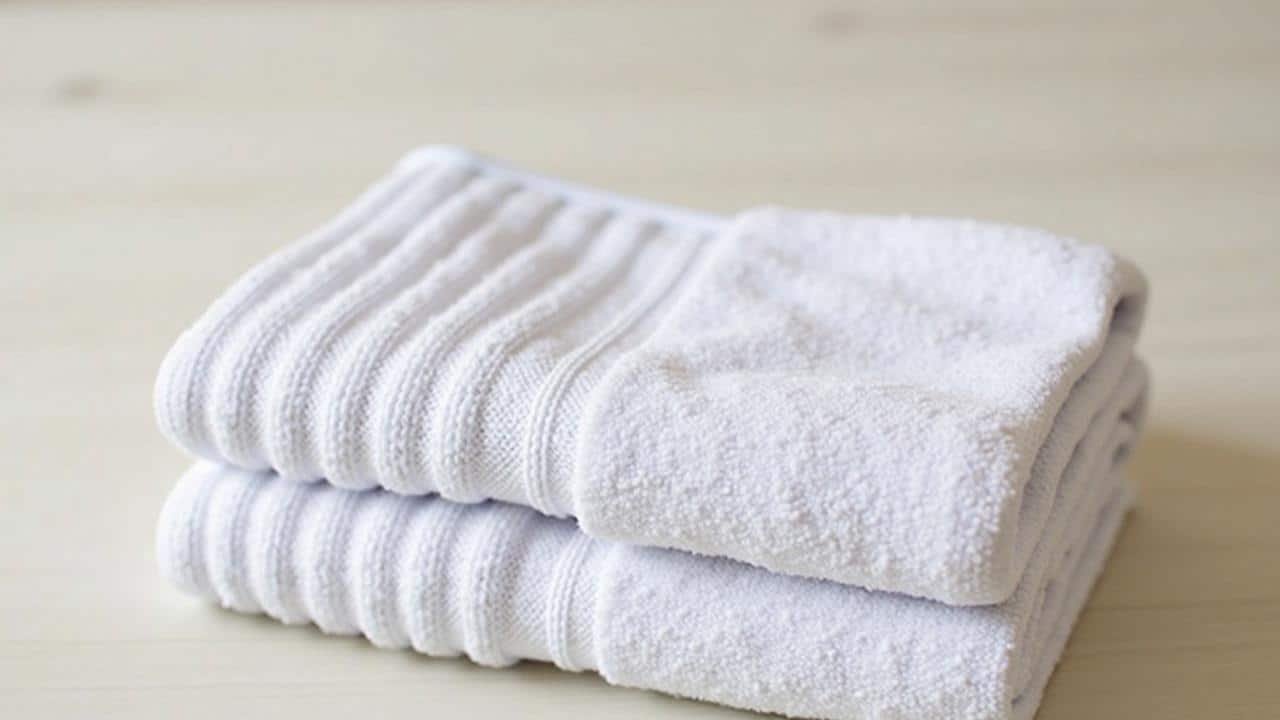
Here’s the fold. Shake the towel once to lift the loops. Lay it flat. Fold it lengthwise in thirds, but offset the edges so the layers don’t sit flush. Then fold it in a loose Z: one end back toward the middle, the other end forward, so you’re stacking panels with gaps. Place it on a bar with the open edges facing out, not buried. Those gaps are your wind tunnels.

That’s it. No fancy origami. The goal is simple: more edges, more channels, fewer compressed layers. If you store towels on a shelf, stand them upright like files with the open edges alternating. On a hook, drape the towel in a gentle U and pinch the center so air can enter the fold. A few centimeters of breathing space make a big difference.
Let’s be honest: nobody really refolds every towel midweek. So set the fold once and make the placement do the work. Hang a Z-folded towel so nothing touches the wall. Don’t wedge it behind bottles or overstuff the rack. And avoid tight spa rolls. They’re pretty in photos, but they trap moisture and breed that gym-bag vibe. Pretty doesn’t always mean practical.
What it changes in real bathrooms
In small apartments, towels often dry in humid air. A tight fold becomes a slow cooker for damp. An open-edge Z-fold acts like a mini chimney. Warm air rises through the gaps you created, taking moisture with it. Drying time shrinks. The scent stays neutral instead of turning mushroomy by evening.
Maya, who shares a tiny place with two friends, swore by rolled towels because they looked “hotel.” Then she switched. “I kept one rolled and one open-edge,” she told me the next week. “The rolled one smelled like a pool locker by the end of day two. The open one still smelled like nothing. That’s the dream.” Her bathroom didn’t change. The fold did.
You can see the logic. Cotton is a capillary network. Water wants pathways out. When layers are offset and edges are exposed, capillary action plus airflow moves moisture from the inside to the outside, where it can evaporate. Fewer uniform, pressed layers mean less water trapped in the core. It’s the same reason a stack of paper dries slower than a fan of cards.
Practical tips, small wins
After your shower, give the towel a quick two-second shake. Fold lengthwise in uneven thirds, then form that loose Z with at least one open edge showing. On a bar, keep a finger’s width between towels. On a hook, drape so air can slip between the front and back. If you can, rotate which side faces out when you walk past — it helps any lingering damp find the air.
Common slip-ups? Folding a towel into a perfect brick. Rolling it tight like a burrito. Hanging it flush to a cold wall. Overloading the bar so everything touches. Using fabric softener every wash, which can coat fibers and slow drying. You don’t need to become a laundry monk. Small habits beat big chores. And yes, open windows or a fan still help.
Leave room for air is the quiet rule hiding under all of this. A few more gentle reminders make the fold go further.
“Don’t fight the fiber. Give it space, not pressure, and it will do what cotton does best — dry fast and smell like nothing.”
- Skip tight rolls for everyday use; save them for guest baskets.
- Wash with less detergent than you think; rinse matters more than perfume.
- Every few weeks, run a hot wash with a cup of white vinegar to reset fibers.
- Open edges out on the rack so air can find the core.
A small change with big ripple effects
The shape you give a towel is a vote for fresh or funky. The open-edge Z-fold doesn’t ask for money, gadgets, or a new rack. It asks for a habit you can do in three seconds while the kettle heats. That’s why it sticks. It doesn’t fight your routine, it rides it.
There’s a quieter upside too. When towels dry fully between uses, they last longer. Less mildew, less over-washing, less fiber wear. Colors stay brighter. The bathroom smells like air, not effort. People talk about “spa bathrooms” like they’re marble and eucalyptus. Often they’re just spaces where moisture moves, not lingers.
Try it for a week and notice the weight of your towel at night. Notice the absence of that micro-must. Notice the tiny relief of reaching for fabric that feels new again. The fold seems fussy at first. It becomes second nature fast.
| Point clé | Détail | Intérêt pour le lecteur |
|---|---|---|
| Open-edge Z-fold | Lengthwise thirds, loose Z, edges exposed | Faster drying without extra effort |
| Air channels > tight rolls | Creates convection paths through layers | Fewer musty smells between washes |
| Small habits stack | Shake, space on bar, rotate sides | Fresh towels, longer fabric life |
FAQ :
- Does this fold work with thick, luxury towels?Yes. Heavier GSM towels need air even more. Keep the fold looser and space them on the bar.
- Is a towel warmer better than this fold?Warmers help, but the fold still matters. Heat plus airflow dries fastest. No warmer? The fold still delivers.
- Can I do this on a hook, not a bar?Yes. Drape in a wide U and pinch the midpoint so air travels between the layers. Avoid a tight, skinny drop.
- Will fabric softener ruin the effect?It can coat fibers and slow evaporation. Use it sparingly or switch to wool dryer balls and the occasional vinegar rinse.
- What if my bathroom has no window?Create air, don’t chase it. Use the Z-fold, leave a gap to the wall, crack the door, and run the fan for a few minutes post-shower.