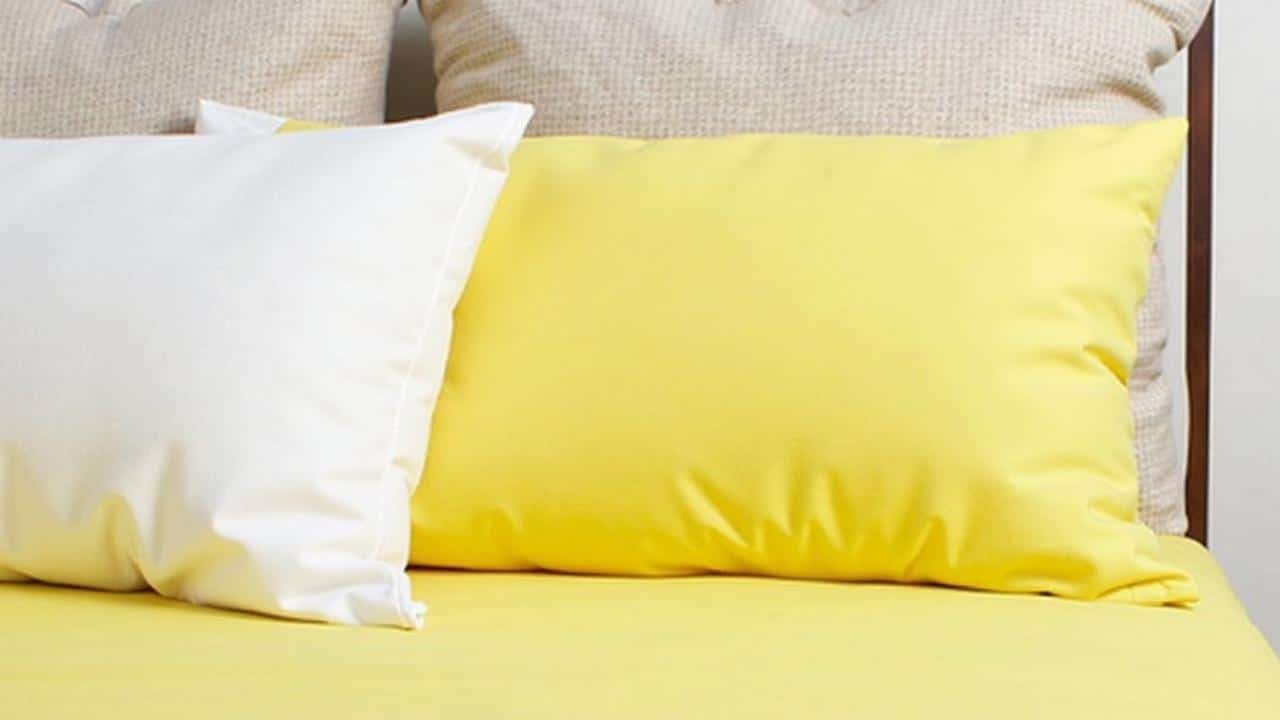
Sweat, skincare, and late-night reading sessions all leave their mark, quietly and steadily.

Yellowing doesn’t mean your pillows are finished. With a few low-cost pantry staples and the right order of steps, you can lift stains, tame odours, and keep fibers intact without resorting to harsh bleach.
Why pillows yellow in the first place
Body heat encourages perspiration and oil transfer overnight. Add skincare, hair products, drool, and occasionally damp hair, and you have a protein-and-lipid cocktail that binds to fabric. Over time, oxygen and heat oxidise these residues, producing that familiar yellow cast.
Yellowing is mostly protein and oil build-up, not “age.” Target the chemistry of the stain and you restore the fabric’s brightness.

Before any deep clean, check the care label and the pillow’s fill. Most polyester and down/feather pillows can be machine-washed. Memory foam and latex should be spot-cleaned only.
Pre-treat with baking soda
Bicarbonate of soda gently abrades, lifts oils, and neutralises odours. It also boosts detergents during the main wash.
How to use it
- Make a spreadable paste: mix about 4 tablespoons baking soda with 1 tablespoon water.
- For extra punch, replace the water with 3% hydrogen peroxide for a foaming lift.
- Spread over stains; work in with a soft toothbrush using small circles.
- Leave for 15–20 minutes, then wipe off with a damp cloth.
If the stains are heavy, repeat once. Pre-treatments reduce the workload for the wash cycle and help prevent re-depositing soils.
Use hydrogen peroxide the smart way

At 3% strength, hydrogen peroxide breaks down protein-based marks like sweat without the harshness of chlorine bleach. It also reduces microbial load.
Two effective approaches
- Spot treatment: spritz 3% peroxide on stains, wait 5–10 minutes, then blot and launder.
- Wash booster: add 1/2–1 cup of 3% peroxide to the drum with a mild detergent on a warm, gentle cycle.
What to know
Always patch-test on a hidden seam. Never mix peroxide with vinegar, ammonia, or bleach. Combining chemicals can release hazardous gases.
Color-piped edges and dyed trims can shift, so test first. On memory foam or latex, stick to light, controlled blotting rather than soaking.
Apply foaming shaving cream
Old-school white shaving foam contains surfactants similar to hand soap. Those micelles surround oily soil and lift it from fabric.
How to use it
- Choose plain white foam with no dyes. Avoid gels.
- Cover the stain with a 3–5 mm layer. Wait 30–60 minutes.
- Wipe away with a damp microfiber cloth until residue is gone.
- Machine-wash to finish and remove any lingering film.
This trick shines on ringed drool spots and patchy yellow areas that resist detergent alone.
Reach for enzyme-based cleaners
Enzymes attack the building blocks of stains. Proteases tackle proteins (sweat, saliva), lipases address oils, and amylases handle starches from cosmetics.
Best results method
- Pre-treat: spray or dab an enzyme cleaner over stained zones until damp.
- Give it time: let it sit 10–15 minutes to work.
- Soak: submerge in cool water for 30–60 minutes to keep enzymes active.
- Wash: launder on a warm gentle cycle with a mild detergent.
Wear gloves if you’re sensitive, ventilate the room, and avoid inhaling spray mist. People with asthma should consult a clinician before using enzyme-heavy products.
Wash or soak with vinegar
White distilled vinegar (5% acetic acid) changes stain chemistry and neutralises odour compounds. It’s a handy pre-soak and a rinse aid.
Two simple options
- Soak: combine 1 part vinegar with 1 part warm water in a tub or basin. Submerge pillows for several hours or overnight, then wash warm on gentle with detergent.
- Blot: apply vinegar to a cloth and tamp stained spots before a normal wash.
Do not mix vinegar with hydrogen peroxide or bleach in the same container. Use them in separate steps with a full rinse in between.
A second rinse helps remove any remaining tangy scent.
Drying and care that prevent stains
Drying is as important as washing. Trapped moisture can cause musty odours and mark fabrics.
- Down/feather and polyester: tumble dry on low with two dryer balls until fully dry; pause and fluff to redistribute fill.
- Foam and latex: air-dry flat away from direct heat; increase airflow with a fan.
- Sun assist: an hour of indirect sun adds natural brightening and odour reduction.
- Protect: add zippered pillow protectors under cases to block sweat and oils.
- Routine: wash washable pillows every 3–4 months; launder cases weekly; wash protectors monthly.
What works for different pillow types
| Pillow type | Can you machine-wash? | Heat tolerance | Best stain approach |
|---|---|---|---|
| Polyester fiberfill | Yes, gentle cycle | Low–medium dry | Baking soda pre-treat + peroxide booster |
| Down/feather | Yes, gentle cycle | Low dry with dryer balls | Enzyme pre-treat + long rinse; avoid heavy alkalis |
| Memory foam | No, spot clean only | No heat, air-dry | Foaming shaving cream or diluted vinegar blot; light peroxide spot test |
| Latex | No, spot clean only | No heat, air-dry | Baking soda deodorise + gentle enzyme spot pre-treat |
Five fast fixes at a glance
- Baking soda paste: lifts oils, fights odour; 15–20 minutes dwell; safe on most fabrics.
- Hydrogen peroxide 3%: breaks protein stains; 5–10 minutes; patch-test colours.
- Foaming shaving cream: surfactant clean; 30–60 minutes; use dye-free foam only.
- Enzyme cleaner: targets protein/oil; 10–15 minutes plus cool soak; good ventilation advised.
- Vinegar soak: shifts stain chemistry; hours or overnight; rinse thoroughly before drying.
Extra gains: small tweaks that keep pillows bright
Shower before bed when you’ve used sunscreen or retinol serums; products transfer easily to textiles. Go to bed with dry hair to avoid setting moisture into the fill. Rotate pillows so the same area doesn’t bear all the sweat load.
An oxygen-based brightener (sodium percarbonate) can replace chlorine bleach in the wash for polyester and down. It targets oxidisable soils with less fiber damage. Use warm water to activate, and avoid on foam or latex.
When a pillow stays lumpy after a full dry or smells musty even after washing, it’s time to replace it. Most pillows last 1–2 years of nightly use.
Allergy-prone sleepers can add a tightly woven, washable protector to reduce dust mites and extend the time between deep cleans. A quick monthly “refresh cycle” with hot water on cases and protectors keeps the pillow core cleaner for longer.