You wash, you air-dry, you try lemon and salt, yet the board still carries a past life. The truth is simple and a bit annoying: porous surfaces love to hold onto dinner. There’s a fix that doesn’t require new tools, power scrubs, or a weekend deep clean. It’s a tiny change, and it slips quietly into your routine. The kind of tweak you do without thinking. The kind that saves tomorrow’s peaches from tasting like last night’s salsa.

It happened on a Tuesday night in a small kitchen with mismatched bowls. Diced onion, a crush of garlic, a swipe of jalapeño, and the board was perfumed like a taco truck at midnight. The next morning, the board looked clean, but my coffee mug picked up a whiff anyway. I thought the smell would fade. It didn’t.
Then a neighbor who cooks like a chef did one fast trick at the sink. No special soap. No new gear. A quick move, a shrug, a smile. Just water.
What really sinks into your cutting board
Smells don’t simply sit on top — they settle in. Wood has tiny tubes and fibers; plastic collects knife scars like tattoos, and those grooves trap oils and sulfur compounds from onions, garlic, and fish. When you cut, you push aromatic juices into those little spaces, where they hang out long after dinner is done. We learned to live with it, but we didn’t have to.

We tried a simple kitchen experiment at home: three boards, same red onion, same number of cuts. One board went in dry, one was quickly rinsed with cold water first, one was dry but oiled. After washing, the pre-wetted board came out with almost no onion breath, the oiled board did better than dry, and the dry board smelled like last night’s soup. Not a lab study, just a Tuesday proof that felt convincing.
Here’s why the tiny change makes a big difference. Wood and plastic are thirsty in different ways; water fills the pathways in wood and sits in the scars of plastic, creating a temporary barrier. That barrier slows the uptake of odor molecules into the material. Cold water keeps wood fibers tighter, so less gets in; hot water opens things up and drives smells deeper. Mineral oil helps by sealing fibers, but a quick cold-water “pre-wet” is the immediate shield.
The tiny change: give your board a cold-water shield
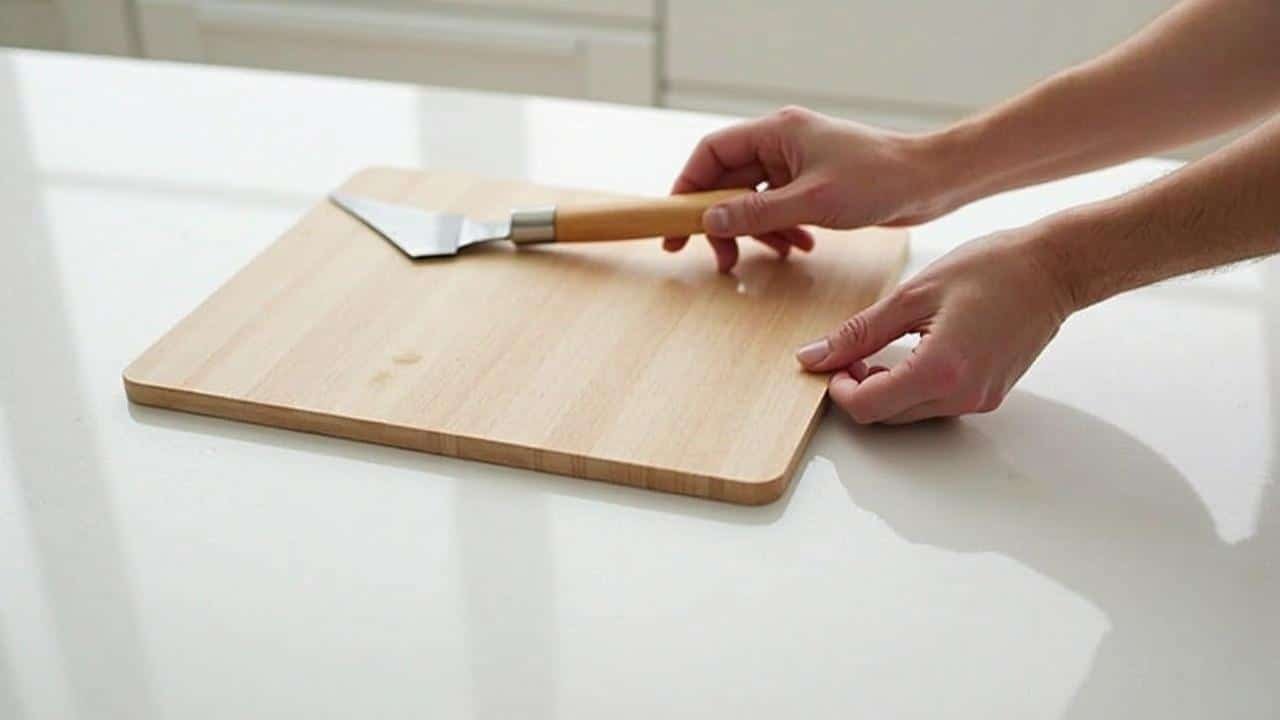
Right before you cut anything smelly, run the board under cold water for three to five seconds, front and back. Shake off the excess and swipe it with your hand or a clean towel so it’s damp, not dripping. Cut as usual. Rinse again when you’re done, add a pinch of baking soda or a lemon-salt rub if you want, then wash and dry upright. **The fix takes less than 10 seconds.**

Skip hot water before cutting — it opens the wood and helps smells sink in. Don’t soak a wooden board in the sink, ever. Keep a separate board for raw meat to avoid cross-contamination. If your board is end-grain wood, this trick still helps; if it’s plastic, it helps too, because water fills micro-grooves where odors lurk. Let’s be honest: nobody oils a cutting board every day. Pre-wetting is the fast habit you’ll actually keep.
Think of it as a tiny ritual: water, shake, chop. **Cold water first, then you cut.**
“Treat your board like a sponge you control — saturate it with clean water before food can do it for you.”
- For stubborn odors after the fact, a baking soda paste (1 tablespoon soda + 1 teaspoon water) neutralizes smells fast.
- Lemon and coarse salt scrub away film and lift oils without harsh chemicals.
- Once a month, a thin coat of food-grade mineral oil or a board cream seals the surface and slows future absorption.
- Plastic boards can handle a diluted bleach rinse (1 teaspoon bleach per quart of water), then rinse well and air-dry.
- Dry boards vertically with air on both sides to prevent warping and musty smells.
Rethink the board, reclaim the smell
We’ve all had that moment when you slice fruit and it tastes vaguely like last night’s garlic. A board should be a stage, not a memory bank. The cold-water shield resets your board before you even start chopping, so the flavors you’re cooking with stay in your food, not in the fibers under your knife. **Your board won’t smell like last night’s garlic anymore.**
There’s something calming about small, repeatable moves in the kitchen. A brief rinse. A shake. A wipe. The board looks the same, but it behaves differently. Flavors stay clean, your nose stops second-guessing, and your recipes taste like themselves. Small changes stack up. One day you notice your board just smells like wood, and dinner smells like dinner.
Try it once with onions. Then try it with garlic, scallions, smoked fish, kimchi, or ripe mango that normally hangs around. Notice what doesn’t hang around. Share it with the friend who says their board always smells “kinda weird.” Tiny rituals spread. And a kitchen that smells right changes how you cook.
| Point clé | Détail | Intérêt pour le lecteur |
|---|---|---|
| Cold-water pre-wet | Rinse the board 3–5 seconds, shake off, cut | Fast barrier that stops odors from soaking in |
| Avoid hot water before cutting | Heat opens fibers and deepens absorption | Prevents making the smell problem worse |
| Monthly seal | Thin coat of food-grade mineral oil or board cream | Long-term protection with minimal effort |
FAQ :
- Does the cold-water trick work on both wood and plastic boards?Yes. On wood it fills capillaries; on plastic it fills knife grooves. Both see fewer odors afterward.
- Will water warp my wooden board?Not if you keep it brief, avoid soaking, and dry it upright with air on both sides. Long soaks are the warp risk.
- What if my board already smells like garlic?Scrub with a baking soda paste, rinse, then rub with lemon and salt. Wash, dry, and start using the pre-wet trick for future cuts.
- Can I use vinegar as a pre-wash?Vinegar deodorizes after cutting, but for the pre-wet, plain cold water is best. Use vinegar post-wash if a smell lingers, then rinse well.
- How often should I oil a wooden board?When it looks dry or feels fuzzy — usually monthly. A thin coat, let it drink, wipe off excess. Not daily. Not complicated.