A quietly viral trick promises something rare in housework — days of clean, not hours. The twist lives under your sink, not in the cleaning aisle.

The sun hit the kitchen tiles at 9 a.m., the honest kind of light that snitches on footprints and soap streaks. I’d mopped the night before, felt good about it, then woke to a fine film dancing in the glare like dust in a projector beam. A neighbor texted our building chat with a weird tip, the kind that makes you pause at the bucket. “Try a splash of this,” she wrote, emoji and all, “and watch how long the floor stays clean.” I opened the cupboard and pulled a familiar bottle — blue label, soft scent, made for laundry. *I didn’t expect it to cross over.* The bottle wasn’t a cleaner.
The ingredient hiding in plain sight
People are pouring a tiny splash of fabric softener into mop water and swearing their floors stay clean for days. The logic starts with how it looks and smells, but the real magic is what you don’t see. **Dust doesn’t grab on as quickly, and footprints don’t stamp in as loudly.** The surface seems to shrug off life’s little messes.
Ask around and you’ll hear the same little story, told in different kitchens. A parent with sticky-fingered twins tries half a teaspoon on a Saturday, then texts on Wednesday: “Still looks okay?” A short video from a Scottish cleaner shows her bucket ritual and racks up comments like confetti. No lab coats, just lived-in floors getting a longer break between mops.

Here’s the simple science: fabric softener is rich in cationic surfactants, which neutralize static on fabrics — and on hard floors, that can mean less static charge to attract dust. These agents leave a whisper-thin, silky film that can reduce squeaky friction and visible streaks. Go heavy-handed and you get residue and a slippery feel; go light and you get that subtle, “still-clean” window that stretches a day or two longer.
How to try it without regretting it
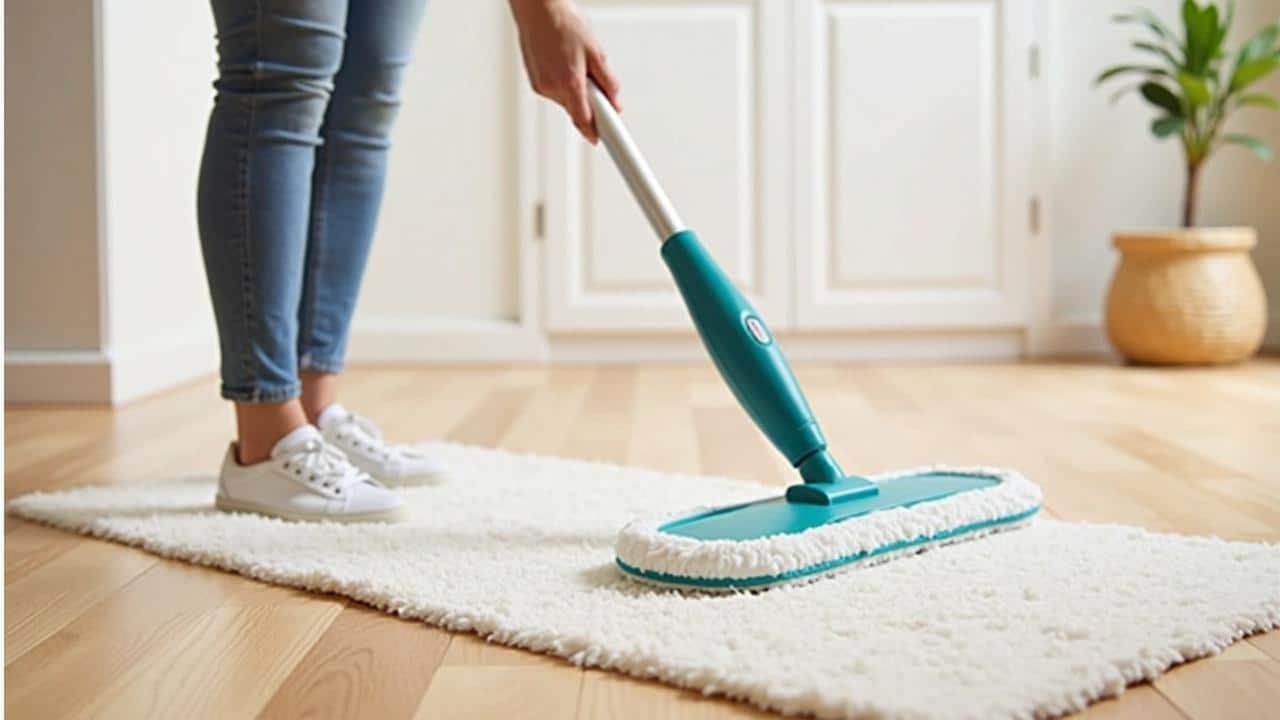
Start small: 1/2 teaspoon of liquid fabric softener in a 5-liter bucket of warm water. Mop as usual with a damp, well-wrung microfiber head, then do a quick dry buff with a clean microfiber cloth. **That’s it — no need to drench the floor, and no need to rinse if you’ve kept the dose tiny.** Test a hidden corner first, especially on anything delicate.
Most misfires come from enthusiasm. A capful smells nicer but lays down too much product, which can turn tacky over time. Skip this on waxed wood and unfinished stone, and never mix with bleach. Fragrance-sensitive? Choose an unscented softener or reduce to just a few drops. Let’s be honest: nobody really mops every day, so a lighter, smarter bucket helps you stretch the gap without feeling like you’ve given up.

Professional cleaners echo the same principle: tiny dose, smooth results. They like how it calms static and leaves a soft sheen that’s more “fresh” than “fake.”
“Think perfume, not soup,” says London-based housekeeper Mina K. “You want the softener barely there — less than a teaspoon — or you’ll feel it underfoot.”
- Use: 1/4–1/2 tsp softener in 5 L warm water
- Best for: sealed tile, vinyl, laminate, sealed concrete
- Skip on: waxed wood, oil-finished floors, natural stone
- Don’t mix with: bleach or strong alkaline cleaners
- Finish with: a quick microfiber buff for a longer ‘clean look’
Where it shines — and where it doesn’t
Sealed floors like vinyl plank, glazed tile, and many laminates respond well to the soft, anti-static veil this trick leaves behind. Think high-traffic hallways and kitchen tiles that collect sock lint and pet fur — the kind of dirt that floats and lands rather than spills and stains. **On those surfaces, one tiny dose can buy you two extra calm days before the bucket calls your name.** Big win for small effort.
On reactive or porous surfaces, keep the softener in the laundry. Raw stone can absorb residues and look blotchy. Waxed or oil-finished wood relies on a specific finish chemistry that household additives can smother. If you’re unsure what your floor is sealed with, test a postcard-sized corner near a baseboard and leave it a day. No clouding, no tack, no scent trapped? You’re likely fine.
If fabric softener feels like a step too far, a pinch of rubbing alcohol in the mop water speeds evaporation and reduces streaks; a tablespoon of white vinegar cuts mineral haze on tiles; a drop of dish soap tackles greasy kitchen tracks. Pick one helper at a time. And hold the marketing voice in your head to account — you don’t need a dozen specialized cleaners when a couple of smart tweaks make the everyday stuff work harder.
There’s a quiet relief in gaining back an extra day or two of “looks clean” from your floors. It adds a breath to the week, a small margin that busy homes rarely get. We’ve all had that moment where the afternoon light catches every streak and you feel one chore behind — this hack softens that moment. It’s not fancy, and it’s not for every surface, but it’s real-world practical in the places where life actually happens. Try it, talk about it with the people who share your floors, tweak the dose, and see where your home lands.
| Point clé | Détail | Intérêt pour le lecteur |
|---|---|---|
| Surprising ingredient | A tiny splash of liquid fabric softener in mop water | Extends the “clean look” by reducing dust cling and streaks |
| Safe dosage | 1/4–1/2 teaspoon per 5-liter bucket, microfiber buff | Gets benefits without residue or slippery feel |
| Where to use/avoid | Great on sealed tile, vinyl, laminate; avoid waxed wood, raw stone | Protects surfaces while making cleaning easier |
FAQ :
- Is fabric softener in mop water safe for hardwood?Not for waxed or oil-finished wood. On well-sealed polyurethane wood, a micro-dose may be fine, but test a hidden spot and stick to a very light application.
- How much should I use?Start with 1/4 teaspoon in 5 liters of warm water. You can nudge up to 1/2 teaspoon if your floor is sealed and you want a touch more anti-static effect.
- Can I mix fabric softener with bleach or vinegar?Skip bleach entirely. If you use vinegar, use it on a separate occasion; mixing products can throw off pH and create residue.
- Will it make the floor slippery?Only if you overdose. Keep the measure tiny and finish with a dry microfiber buff; the surface should feel normal underfoot.
- Are there alternatives if I don’t want fragrance?Yes: a tablespoon of white vinegar for tile haze, or a splash (1–2 tbsp) of rubbing alcohol for quick-dry, streak-minimizing mopping. Use just one helper per bucket.