No gym membership. No special gear. Just a simple rhythm you can slip into almost anywhere. The kind of habit your future self thanks you for, in a voice you can already hear.

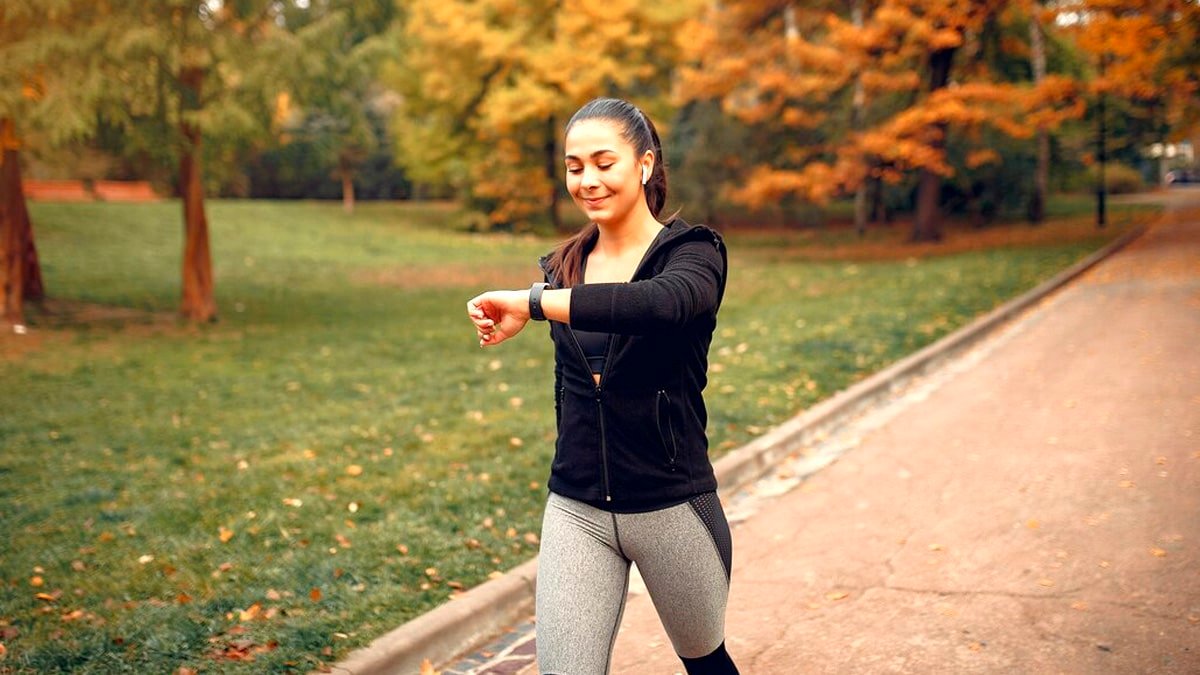
I saw it on a Tuesday morning, pale sun over the park, when the dog walkers gave way to a steady stream of office folk moving with a particular intent. Not rushing. Not dawdling. A pace that looked like they had something to catch but also something to keep—health, time, a breath that arrives just in time. A woman in a red coat checked her watch, lengthened her stride, and kept that beat across the path like a metronome. We’ve all been there: stalling, then deciding today we’ll finally do the thing we say we’ll do. She made it look almost too simple. Seven extra years.
The small daily habit that acts like compound interest
There’s a straightforward habit that public health researchers keep circling back to: brisk walking, about 20–30 minutes a day. Not a slog. Not a shuffle. A purposeful walk that raises your heart rate and warms your skin. **Brisk walking is the low-friction, high-return habit almost anyone can borrow.** It threads into commutes, lunch breaks, phone calls, school runs, supermarket loops, and the five spare minutes you didn’t plan to have.
When the Copenhagen City Heart Study tracked thousands of adults over decades, light-to-moderate joggers lived roughly six years longer than non-runners—men by about 6.2, women by about 5.6. Zoom out, and European cardiology groups have flagged a similar story: 20–25 daily minutes of moderate movement can add between three and seven years to life. That’s not marathon math. That’s “take the longer route, pick up the pace” math. One habit, quietly repeated, becomes a runway.

Why does it work? A brisk walk nudges the heart and lungs into their happy zone, where oxygen moves faster and blood vessels get more elastic. In that zone, insulin behaves better, inflammation loosens its grip, and blood pressure edges down—small wins that stack. Cells sense the signal too: studies link regular moderate activity to longer telomeres, a marker of cellular aging, as if movement keeps the biological clock from sprinting. The key isn’t exhaustion; it’s consistency at a tempo your body reads as “we’re made to do this.”
How to build a 7‑year habit into a messy life
Start with 22 minutes on the clock. Walk like you’re late but not panicked. You should be able to talk in short sentences, not sing full verses—this is the “talk test.” If you like numbers, aim for roughly 100 steps per minute or a heart rate around 60–70% of your max. Split it if you need to: three 8-minute loops around the block, two 11-minute passes from desk to corner to desk. *No heroics required.*
Common tripwires: going too hard too soon, waiting for perfect weather, and tying progress to a new pair of shoes that never arrives. There’s the all‑or‑nothing trap too—missing Tuesday and calling the whole week lost. Be kinder to the you-who-is-trying. Walk the stairs to the meeting two floors up, park one block farther, pace during a phone call. **Let the habit be small enough to survive a bad day.** Let’s be honest: nobody really does this every day.

Think of consistency as a feeling. You want a pace your brain doesn’t argue with tomorrow.
“Five days out of seven beats one heroic Sunday,” says a cardiologist friend who plugs brisk walks between ward rounds. “Consistency is protective—intensity is optional.”
Here’s a tiny field kit to keep you moving:
- Anchor it: same time, same cue—after coffee, before lunch, when the kettle boils.
- Make it social: a colleague, a neighbor, a podcast you only allow on walks.
- Use micro-routes: 7-minute loops you can repeat or cut short.
- Have a rain plan: mall corridors, stairs, a covered parking deck.
- Track streaks, not perfection: aim for 150 minutes a week, in any mix.
The ripple effect that outlives a calendar
The sneaky magic of a brisk daily walk isn’t only the added years; it’s the better years while you’re living them. Energy rises, mood steadies, sleep smooths out, and you start choosing the apple without making a speech about it. The habit becomes a gateway: you feel a little stronger, so you carry the groceries, you take the scenic block, you say yes to a weekend trail you’d have skipped. **That’s how a small decision becomes a story about who you are.** Share the walk with a friend and it doubles—the conversation lifts faster than your heart rate, and the minutes dissolve. You won’t remember every lap. You might remember how the evening light hit the trees on the day you needed it most.
| Point clé | Détail | Intérêt pour le lecteur |
|---|---|---|
| Brisk pace, short time | 20–30 minutes, 5 days a week | Fits into commutes and breaks |
| Easy intensity check | “Talk test” or ~100 steps/min | No gadgets or guesswork |
| Big long‑term payoff | Research links to up to 7 extra years | More life and better daily energy |
FAQ :
- How fast is “brisk” walking?Think “late for a meeting” speed. You can talk in short sentences but you’re not singing; that’s usually around 3.5–4.5 mph or ~100 steps per minute.
- Do I need 10,000 steps a day?No. The benefits rise well before that number. Hitting 7,000–8,000 steps is already linked to lower mortality, and focused brisk minutes matter as much as totals.
- Is jogging better than walking?Jogging can add benefits if you enjoy it, yet brisk walking delivers a large slice of the longevity gain with less injury risk and easier consistency.
- What if my knees or back complain?Keep the brisk pace shorter at first, choose softer surfaces, and try intervals of 3 minutes brisk, 2 minutes easy. If pain persists, get a quick check before ramping up.
- Can I split the walk into chunks?Yes. Three 10‑minute walks or two 11‑minute loops total the same protective minutes. Many people find mini-walks easier to weave into real life.