That lingering pan-fried smell that clings to curtains, hair, and the hallway? It doesn’t care about your open window or your vanilla candle. We’ve all had that moment when dinner ends but the air still feels crowded. Here’s the old-school fix people used before plug-ins and perfumed sprays: a humble acid that quietly eats odors instead of hiding them.

The vent roars, the window is cracked, and still the smell stands its ground. My neighbor texts a polite “smells good!” which is neighbor code for “it’s everywhere.”
On the counter, I pour a shallow bowl of **white vinegar** and set it near the hot pan. Five minutes. Ten. The air changes in small, honest steps. Less fish. Less fry. More clean nothingness. *Yes, really.*
The bowl did what the vent hood couldn’t.
The one-bowl fix your grandmother trusted

The trick is disarmingly simple: a shallow bowl of white vinegar on the counter while you cook, and another after you’re done. The acetic acid in vinegar grabs onto pesky molecules from fish, garlic, and fried oil, then neutralizes them. No fake apricot cloud. No heavy perfume that makes your kitchen smell like a taxi from the 90s.
Think of it like an odor “magnet.” Big surface area. Quiet work. No drama. When the room is warm, the effect feels faster because more of the smell is floating free. You just let the bowl sip it up, bit by bit.
One evening I made smash burgers, the kind that stamp themselves on your drapes. I placed two bowls—one by the stove, one near the door. Fifteen minutes later, the hallway smelled like hallway again. Not mint. Not cinnamon. Just neutral air. Friends asked what spray I used. There wasn’t one. The bowl just sat there, doing its non-glamorous job.

I tried the same move after searing scallops. Same result. The scent curve drops, then flattens, then fades, like a dimmer switch easing down to black. It doesn’t feel like a cover-up. It feels like a reset button for your room.
Why it works is plain chemistry, minus the lab coat. Odors from fish and onions carry amines and sulfur compounds. Vinegar’s mild acid neutralizes and binds them, especially when the bowl is shallow and close to the action. Perfumed sprays try to win by shouting louder. Vinegar wins by listening and absorbing. It partners well with air flow, too. A small fan helps pull air past the bowl, like a stream moving over a sponge.
The shape matters more than the brand. Go with a pie plate or wide cereal bowl. You’re chasing contact with the air, not a fancy label.
How to pull it off in 60 seconds
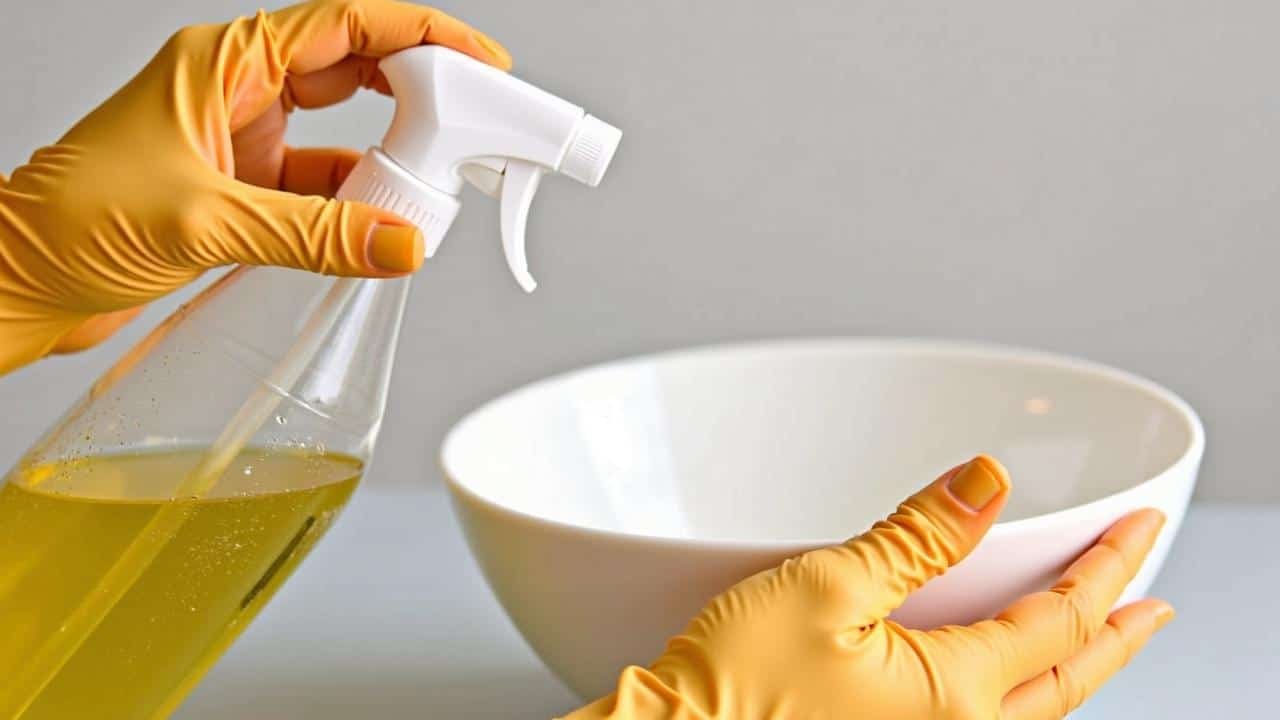
Pour one cup of **white vinegar** into a wide, shallow dish and set it near the heat while you cook. For stubborn sessions—frying, fish, bacon—place a second bowl near the room’s exit. When you’re finished, swap in fresh vinegar and let it sit for 30–60 minutes. If you want a softer finish, drop in a strip of lemon peel or a few spent citrus halves. The goal isn’t scent. It’s silence.
Don’t heat vinegar to a full rolling boil or you’ll just perfume the room with vinegar. A gentle steam for five minutes in a half-and-half mix with water is fine if you like the speed. Skip apple cider or balsamic; they carry their own personality. And if your counters are marble or stone, keep bowls on a coaster. Let’s be honest: nobody does that every day. But when you do, your nose notices.
People worry the room will smell like a salad. It won’t if you don’t flood the air or overheat it. What you get is a soft fade to neutral, then your kitchen’s own clean baseline. That’s the magic.
“My grandmother swore by a bowl of vinegar on the sill. If she fried fish, there were two,” said a chef friend. “It’s the cheapest air filter you’ll ever own.”
- Use wide, shallow dishes for maximum contact with the air.
- Set bowls near the stove and the doorway during and after cooking.
- For a quick boost: simmer 1 cup water + 1 cup vinegar for 5 minutes.
- Avoid stone surfaces; place bowls on a coaster or cutting board.
- Backups for overnight: **baking soda** or **coffee grounds** in small bowls.
A kitchen that breathes, not battles
There’s a small dignity in a trick that asks so little. A bowl, a pour, a breath. It doesn’t fight your home’s smell with louder smells. It just takes the clutter out of the air so the room can be itself again. The side effect is mood. You walk back in and the space feels lighter, like the lights clicked back on.
This is how old objects earn a spot in new routines. One action. One habit. Repeat when the evening gets smoky or the garlic gets bold. The ritual calms you, too. It says: you cooked, you lived, now your home can exhale.
| Point clé | Détail | Intérêt pour le lecteur |
|---|---|---|
| Shallow bowl of white vinegar | Place near heat and doorway during/after cooking | Neutralizes odors fast without perfume |
| Optional quick steam | Simmer 1:1 water + vinegar for 5 minutes | Speeds up absorption after heavy frying |
| Overnight backups | Bowls of baking soda or coffee grounds | Keeps air neutral while you sleep |
FAQ :
- Will my kitchen smell like vinegar afterward?The faint note fades as the bowl sits. For a soft finish, add a strip of lemon peel or ventilate lightly for a minute.
- Is baking soda better than vinegar?They’re teammates. Vinegar works fast during and right after cooking. **Baking soda** shines overnight in closed spaces like cupboards or the fridge.
- Can I use apple cider or rice vinegar instead?You can, but they carry their own scent. Distilled white vinegar is the cleanest option for a neutral outcome.
- Is this safe around pets and kids?Yes, though keep bowls out of reach. Don’t mix vinegar with bleach, and keep liquids off marble or limestone.
- What about coffee grounds or charcoal?Great backups. Dry **coffee grounds** or activated charcoal in small bowls absorb lingering odors, especially overnight or in corners.