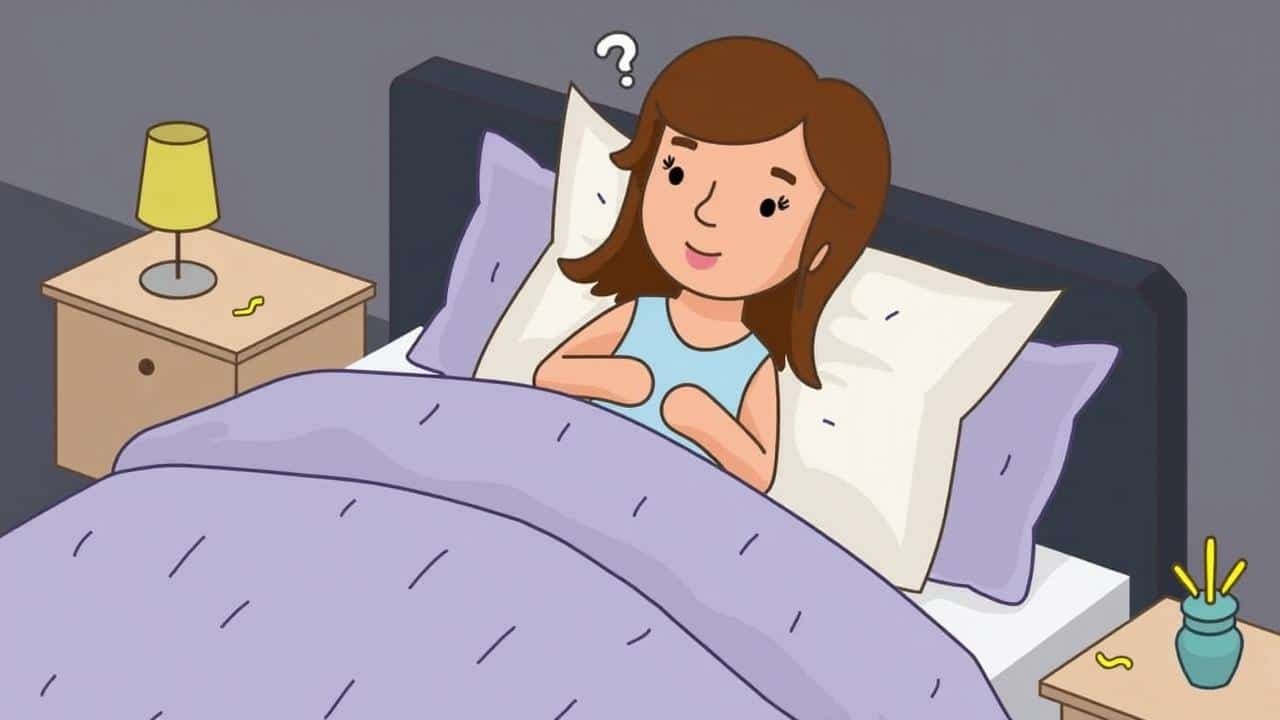
Thoughts stack up, lights are too bright, and a small body tries to power down while a big brain keeps humming. Parents keep looking for a switch.

I watched a dad lie on the floor next to his seven-year-old, shoes still on, eyes soft and a little tired. The room was a galaxy of glow-in-the-dark stars, a library of stuffed animals looking on like sleepy witnesses. “I don’t feel tired,” the boy said, although his voice sounded like a yawn wrapped in a whisper. The dad didn’t debate, didn’t bargain. He asked one question. The kid paused, then started talking, gentle and slow, the way waves sometimes return to the shore. In two minutes, the room was different. The boy’s jaw relaxed. His shoulders dropped. The fan seemed to change sound. The question wasn’t magic. It just opened a door. And that’s where things shift.
The one bedtime question parents swear by
Here it is: “What was your favorite moment today?” That’s it. Not a lecture. Not a story with a moral at the end. A small door that leads to a bigger room. Kids reach for a memory, hold it in their hands, and the nervous system leans toward safety. You can feel it. A body that was bracing starts to settle. A mind that was picking at worries shifts to something warm and simple. It’s a flashlight pointed at the good stuff, and the good stuff answers back.
A mother in Leeds told me she tried this on a night when nothing worked. Socks off, water drunk, lights lowered, and still the carousel kept spinning. She asked, “What was your favorite moment today?” Her daughter said, “When we fed the ducks,” and then described the way one duck waddled like a little old man with a plan. They laughed. Then the girl turned her face into the pillow and stopped talking. Out like a candle. Surveys regularly show that plenty of school-age kids struggle to fall asleep on time. This tiny ritual doesn’t fix everything. It does shave minutes off the wind-down, more often than not.

Why it works makes sense. The brain scouts for threat by default at night, when the day’s guard dogs go off duty. A positive memory nudges the amygdala to stand down and invites the prefrontal cortex back into the room. Storytelling activates a social-safety network: voice tone, eye contact, a shared timeline. That’s co-regulation in action. Gratitude studies hint at the same arc—recalling one good thing tends to lower arousal and soften rumination. The question isn’t sugarcoating. It’s steering. A small, kind reroute from “what if” to “what was good.”
How to ask it so it truly lands
Keep it simple and ritual-like. Lights low, bodies still, phone out of sight. Then, “What was your favorite moment today?” Say it once. Pause. Let the silence do the heavy lifting. If they answer in a word, echo it back, slow and curious: “Snack shack?” If they add detail, follow the feeling, not the facts. Smile. A gentle mmm is enough. Two minutes tops. You can add a soft close: “That sounds like a good day,” and a squeeze. Keep your voice like a warm blanket. That’s the whole method. **Small and repeatable wins the night.**
Common mistakes are easy to fix. Don’t pile on with five follow-up questions. One question is the invitation; more turns it into homework. Skip the pop quiz on manners or the post-game analysis on what they “should have” done. Save that for daylight. If a child shrugs, offer a menu: “Something funny, something tasty, or something cozy?” And if the day was rough, you can say, “We can pick a favorite tiny moment.” Soyons honnêtes : nobody nails this every night. Real life gets messy. **Consistency beats perfection by a mile.**

Some nights, the favorite moment is silly. Other nights, it’s a sigh. That’s fine. You’re building a pathway, not a performance. We are wired for stories at night. As one school counselor told me, “When a child names a safe moment, their breathing changes. You can hear the nervous system letting go.”
“Bedtime doesn’t need more words. It needs the right words, in the right voice, at the right pace.”
- Starter prompts to rotate: “What made you smile today?”
- “What’s one tiny win you want to keep?”
- “What felt kind today—something you did or someone did for you?”
- “What are you excited to try tomorrow?”
- “Is your body asking for anything before sleep?”
Beyond the question: why this changes the room
Ask any parent who’s stuck in the evening slog: bedtime isn’t just about sleep, it’s about power. Who’s in charge, whose timeline matters, whose feelings get space. The question diffuses the contest without giving up structure. You stay the steady harbor; your child gets the safe water. There’s a relief in that for both sides. On a rough day, this tiny ritual says, we still belong to one another. That message lands in the body, not just the head.
On the science side, the sequence is simple. Positive recall lights up the hippocampus, emotion labeling regulates limbic heat, and the warm tone you bring nudges the vagus nerve toward a calmer gear. Pair that with dim light, predictable timing, and less stimulation, and you’ve stacked the deck. It’s not woo. It’s wiring. **Try this tonight, and watch how the air in the room changes.** Two minutes of relational calm can pay back twenty minutes of tossing. Not every time. Often enough to feel like a new chapter.
There’s also a quiet skill you’re teaching: noticing. Kids learn to scan their day for glimmers, not just glitches. That habit compounds. A child who can name one good moment is practicing attention control and self-soothing at once. On hard nights, you can add a gentle option: “Want me to go first?” Share your favorite moment in one sentence. Model the pace and the feel. Don’t sweep pain under the rug. Make space for both: “Favorite moment, and anything you wish had gone differently?” If they take the second path, thank them and keep it light. Then close with, “You’re safe. I’m here. We’re done talking.” Let quiet do its work.
There’s a bigger invitation here. What else in your evenings could shrink, soften, and still matter? A question, a hand squeeze, a bit of shared breath. Families are built on these tiny joins. When a home learns how to shift toward calm without bribes or battles, mornings change too. Teachers notice. Siblings exhale. And kids start to expect that bed is a safe landing, not a stage for one last meltdown. That’s the game. Not perfect nights. Better ones. The kind that stack into a steadier week, then a steadier month. It’s a small door. The room behind it is surprisingly wide.
| Point clé | Détail | Intérêt pour le lecteur |
|---|---|---|
| The question | “What was your favorite moment today?” asked once, softly | Gives a repeatable, low-effort tool that eases bedtime |
| The tone | Slow voice, short pause, minimal follow-ups, two-minute cap | Turns chaos into co-regulation without a power struggle |
| The payoff | Fewer sleep delays, calmer nervous system, warmer bond | Improves nights now and teaches long-term self-soothing |
FAQ :
- What if my child says “I don’t know”?Offer a simple menu: “Something funny, something tasty, or something cozy?” If they still pass, smile and move on. No pressure.
- Can I use a different question?Yes. Keep it positive and concrete: “What made you smile?” or “What felt kind today?” Consistency matters more than the exact wording.
- What about tough days when nothing was good?Try “favorite tiny moment” or let them share a hard bit in one sentence. Thank them, then close with calm. You’re modeling containment.
- Will this replace a bedtime story?No. It pairs nicely. Ask the question, then read. Or read first and end with the question. Keep both short and soothing.
- How long until I see a change?Sometimes night one. More often over a week. Think of it as training the body to expect safety at lights-out. Small, steady beats big, rare.