A single U.S. Lincoln Wheat Penny could turn an ordinary coin collection into a life-changing fortune. While most pennies are worth one cent, certain rare mint years and varieties can sell for tens of thousands — even millions — depending on rarity, demand, and condition. These coins are highly sought after by collectors, auction investors, and museums, and some hidden in old drawers or inherited collections could make the owner instantly wealthy.
Key Highlights
Certain rare pennies hold massive value due to scarcity and collector demand:
- Some early Lincoln Wheat Pennies are valued in the millions
- Specific years and mint marks are extremely rare
- High-grade, well-preserved coins drastically increase value
- Errors and special variations amplify collector interest
- Even heavily worn pennies from early years can still be valuable
- Auction prices continue to rise year after year
Coin Details and Notable Features

Several Wheat Pennies are known today for extraordinary rarity and auction prices. Based on collector trends, the most desired coins often share these characteristics:
- Abraham Lincoln portrait facing right
- Inscriptions including IN GOD WE TRUST and LIBERTY
- Mint year stamped below the portrait
- Wheat stalk reverse design on older coins
- Patina and aging vary with circulation history
Individual Coin Breakdown
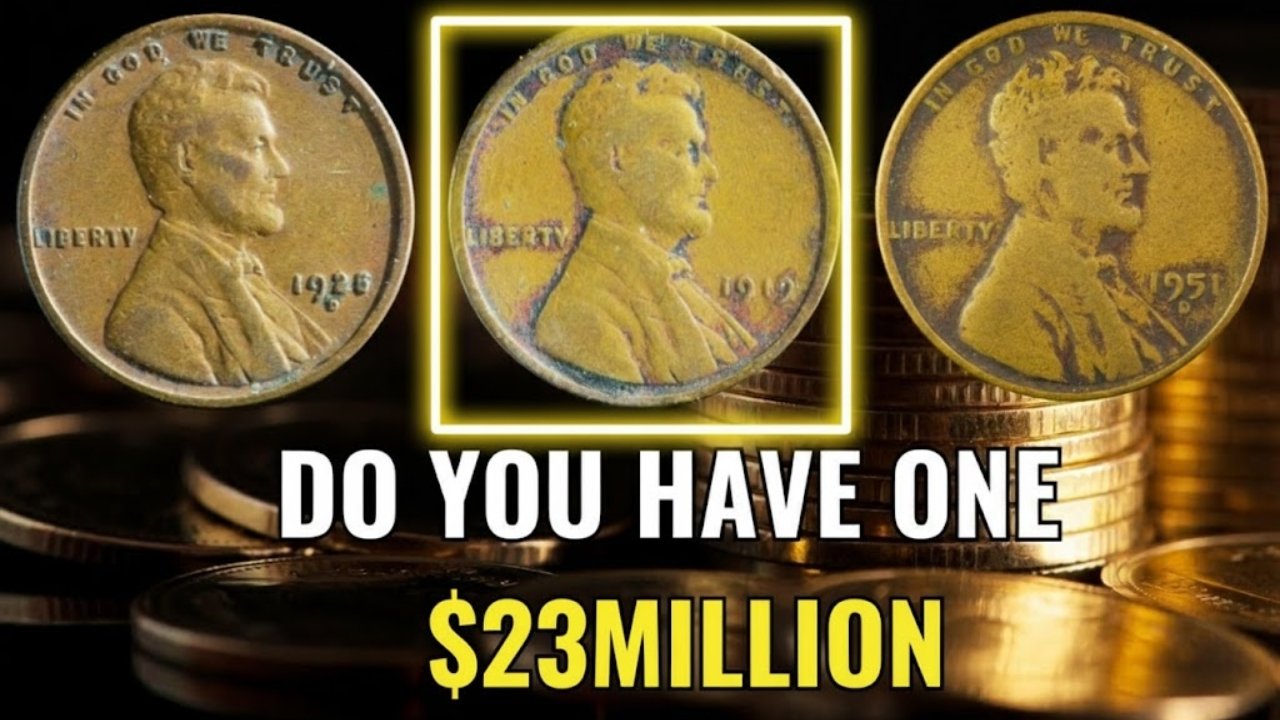
Among the most attention-grabbing Wheat Pennies are several early-dated examples, including:
1. 1920s-Era Wheat Penny
- Portrait of Abraham Lincoln
- Visible text: IN GOD WE TRUST, LIBERTY
- Year appears to be 1926 or similar 1920s strike
- Aged color tone common with circulated wheat cents
2. 1919 Lincoln Wheat Cent
- Same Lincoln portrait and inscriptions
- Text displayed clearly: IN GOD WE TRUST, LIBERTY
- Year 1919 identifiable with visible wear
- Patina indicates significant age and circulation
Early-year Wheat Pennies like 1919 have strong collector demand and are known to exceed high auction values under rare conditions.
3. 1951-D Wheat Penny
- Standard Lincoln portrait with expected inscriptions
- Year visible: 1951-D (Denver Mint strike)
- Darker toning, yet well-defined details
Why These Pennies Can Be Worth Millions

Wheat Pennies become extraordinarily valuable due to limited surviving numbers and extreme rarity in high grade. Condition, errors, and mint location push prices to staggering heights.
- Strong strike clarity and minimal wear
- Rare production years or short mint runs
- Errors such as double-die strikes or off-center prints
- Original patina indicating authenticity
- Collector demand and auction history
The rarest specimens have exceeded multi-million-dollar valuations.
How to Identify a Million-Dollar Penny
- Sharp details in Lincoln’s face and lettering
- Clearly readable year with no fading
- Unique mint marks such as S or D
- Doubling in letters or numbers
- No major scratches, corrosion, or damage
- Rich natural toning instead of polished surfaces
If a coin meets multiple criteria, professional grading is recommended.
Where to Sell Rare Pennies for Maximum Profit

Popular selling channels include:
- Major numismatic auction houses
- Rare coin dealers and evaluators
- Online collector marketplaces
- High-value private collector bids
- Precious metal and currency expositions
Estimated Value Ranges
While common pennies are worth face value, rare variations can escalate dramatically:
- Typical circulated Wheat Pennies: $0.05–$5
- Early-year examples with wear: $50–$2,500
- Rare mint marks or errors: $5,000–$150,000+
- Extremely rare elite specimens: $1 million–$23 million+
Final Verdict
Finding a rare Wheat Penny could be the easiest path to financial freedom. With certain examples selling for millions, a simple coin tucked away in a drawer, box, or jar may be worth more than most cars, properties, or investments. The key is identifying the year, condition, and uniqueness — then getting it authenticated and properly sold.
Before spending your loose change, look closely. A tiny penny could be worth a fortune.