The fix people whisper about isn’t a new gadget or a barista trick. It’s where you keep the beans between brews—and the spot might surprise you.

The kitchen was still blue with first light when the grinder woke the apartment. I cracked a bag I loved last week, expecting berries and cocoa, but the aroma felt… thinned out, like it had drifted overnight. A friend had sent a message late: “Try the freezer. Portion the beans. Don’t thaw.” I rolled my eyes, then tried it with the same coffee, split into tiny jars. The next dawn, the bloom was loud, the cup cleaner, the finish sweeter. I didn’t expect the first sip to pop like that. Cold beans. Bright cup.
The odd habit that makes your coffee bloom
Staling doesn’t announce itself with fanfare. It sneaks in as air meets the beans each time you crack the bag—oxygen nibbling at oils, aromatics slipping away. The unexpected move that keeps your flavor intact is simple: freeze whole beans in small, airtight portions and grind them straight from frozen. **Freezing whole beans—done right—keeps flavor on pause, not on hold.** This isn’t about ice-crusted coffee or frosty flavors. It’s about slowing the clock so your second week tastes like your first.
A quick kitchen test tells the story. Two jars, same roast, sealed on day two: one stays on the counter, the other goes to the freezer. Brew both after ten days. The counter jar tastes fine, but thinner; the frozen jar brings back the bass notes and the high notes at once. There’s a simple principle underneath: most chemical reactions double in speed with roughly a 10°C rise; drop the temperature and you delay the reactions that flatten coffee. What your tongue reads as “fresh” is just slower chemistry, bottled up a little longer.

Here’s what’s really happening. Aromas in coffee are volatile, meaning they fly off into the room fast once beans are exposed. Lipids oxidize, turning round sweetness into papery edges. CO2 diffuses out of the bean, changing how water extracts flavor during brewing. Cool the beans and you slow those paths out of the cup—less oxidation, less aroma loss, a steadier extraction profile. There’s another bonus: colder beans grind more cleanly in many home grinders because heat from the burrs has less chance to smear oils. Fewer wild fines, more even particles, a clearer cup.
How to freeze coffee beans the right way
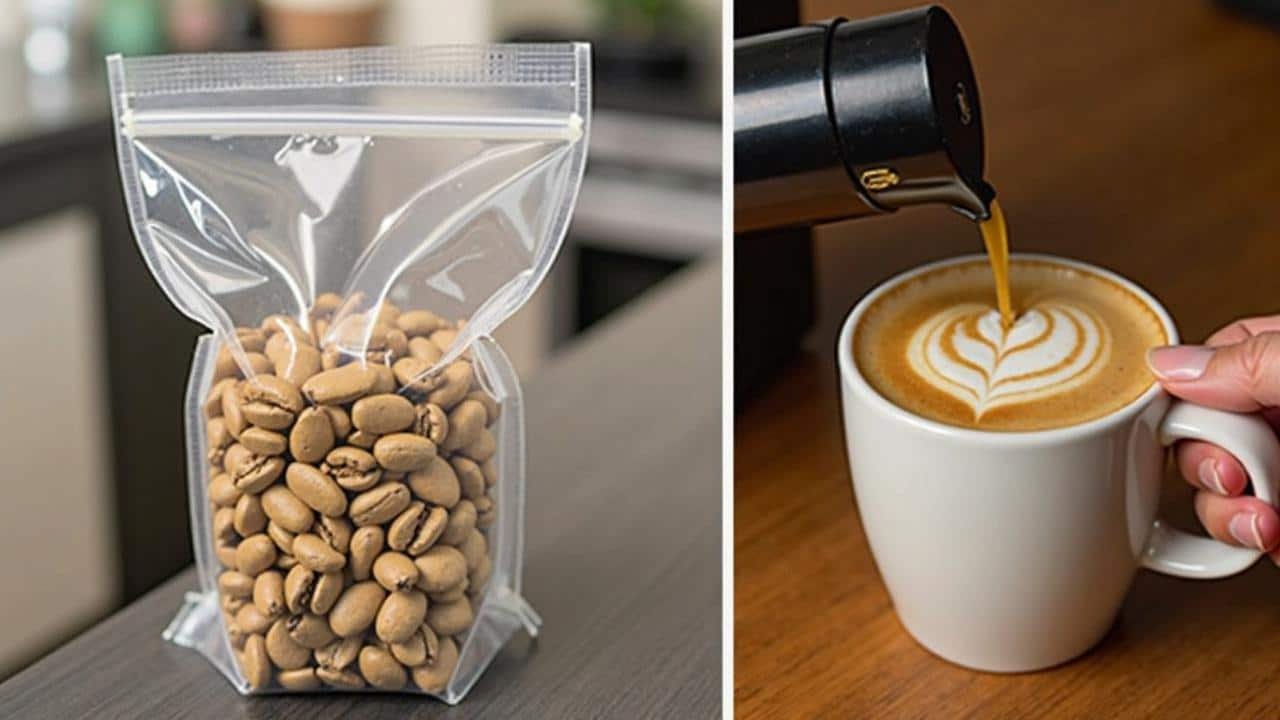
Start with whole beans. Split the bag into single-brew portions (18–20 g for a pour-over, 36–40 g for a bigger Chemex, your usual for espresso). Use small glass jars with tight lids, vacuum zip bags, or rigid containers with minimal headspace. Label roast date and dose. Freeze the same day you open the bag—or the day after degassing settles—then pull one portion at a time straight to the grinder. Don’t thaw. Grind frozen, brew as normal, and notice how the aroma stands taller and the finish lingers longer.
A few guardrails make this easy. Skip the fridge—it swings in temperature and humidity, inviting condensation that dulls flavor and can add fridge smells. Avoid one giant container you open daily; warm air will wash in and condense on the beans, then refreeze on the surface. We’ve all had that moment where a “special” bag lasts two weeks and tastes average by the end. Keep a small counter jar for the next 2–3 days and keep the rest frozen. Let’s be honest: nobody does that every day.

Think in rituals, not rules. Freeze in doses you actually use, pair each with your go-to recipe, and keep the rest out of sight so you’re not tempted to rotate jars in and out. **Grind straight from the freezer for cleaner flavors and calmer static.** You’ll notice less grinder heat, fewer clumps, and a tighter drawdown on pour-overs.
“Cold slows staling; air kills flavor. Control those two, and most of the magic takes care of itself.”
- Do: Portion tightly, label clearly, and keep containers truly airtight.
- Don’t: Thaw and refreeze beans or store near garlic, onions, or open ice.
- Do: Keep a 2–3 day jar on the counter; freeze the rest immediately.
- Don’t: Use the fridge; its humidity and odors are not your friend.
Why this tiny ritual changes the cup
There’s a quiet satisfaction in tasting your favorite roast as the roaster intended, not just on day three, but day thirteen. Freezing in small portions buys you time—enough to enjoy complex coffees without sprinting through a bag. The grinder runs a shade quieter, the bloom puffs up, the sip feels both lifted and anchored. **Flavor loves cold, oxygen hates it.** The unexpected part isn’t the freezer itself; it’s how this tiny tweak shifts your whole morning rhythm. You control the pace, not the bag. Which makes the first cup feel like a little act of care—for the coffee, and for you.
| Point clé | Détail | Intérêt pour le lecteur |
|---|---|---|
| Freeze whole beans in single doses | 18–20 g per jar or vacuum bag, minimal air, labeled by dose and date | Week-two cups taste like week-one, with bigger aroma and cleaner finish |
| Grind straight from frozen | No thawing; the grinder warms beans enough during grinding | More even grounds, fewer wild fines, steadier extraction and clarity |
| Avoid the fridge and repeated openings | Humidity, odors, and condensation flatten flavor fast | Protects your beans from staling and weird smells without extra fuss |
FAQ :
- Won’t freezing damage the beans?Whole beans don’t absorb moisture if sealed airtight. Ice crystals form only when water is present; in properly sealed portions, that’s not an issue.
- How long can I freeze coffee?Flavor holds impressively for 4–8 weeks in single-dose containers, often longer. Most home drinkers report vivid cups up to three months.
- Should I thaw before grinding?No. Take a portion from the freezer, pop it straight into the grinder, and brew. Thawing invites condensation on the bean surface.
- What containers work best?Small glass jars with tight lids, vacuum zip bags, or rigid freezer-safe tins. The key is minimal headspace and a true seal.
- Does this help pre-ground coffee or decaf?Pre-ground stales quickly no matter what; freezing helps a bit but can’t reverse the surface area problem. Decaf benefits from freezing just like regular whole beans.