Light sleepers don’t just wake up. They ricochet. A refrigerator hum stutters, a neighbor’s car door thunks, the dog sighs, and the night rewinds to wide-awake. What if the fix wasn’t in a pill, or a new mattress, but in shaping the air of your room? There’s a nighttime trick that softens the edges of noise so your brain stops patrolling. It’s simple, cheap, and almost invisible once you feel it working.
I lay there waiting for the next interruption like a cat in a window. Then I set the room to a single, low, steady sound. The chaos outside seemed to step back, like a crowd behind a velvet rope.

Somewhere around 2 a.m., the radiator pinged and a bottle on the counter clicked as it cooled. I didn’t flinch. The sound of the room didn’t let them in. It felt like sleeping under a soft roof you can’t see.
It sounded like rain.
Why tiny sounds feel like thunder at 3 a.m.
When you’re a light sleeper, your brain runs night watch. It scans for changes — a sudden door creak, a siren starting, a partner rolling over — and flags them as potential threats. Those micro-alerts don’t always wake you fully, but they yank you toward the surface.

The tricky part is the contrast. A quiet room at 1 a.m. makes a 35–45 dB noise feel massive by comparison. Your nervous system registers the jump, not the number. That jump is the slap on the shoulder that breaks the dream.
One commuter recorded her bedroom with a phone decibel app for a week. Average nights sat at 28–30 dB… until a neighbor’s elevator thumped to 42 dB at random times. Every spike lined up with an eye-open in her sleep diary. Not a perfect study, but a familiar pattern.
We’ve all had that moment when the quiet is so brittle that a single ping shatters it. If your nights are built like glass, even a polite noise is a hammer. The goal isn’t silence — it’s a more forgiving background.

That’s where masking comes in. Consistent, low-frequency sound reduces the contrast between silence and a random noise. Your brain hears one stable blanket instead of sharp edges. The intruders still happen, they just don’t stand out as much.
Think of it as turning the night into a river. A passing twig makes ripples in a puddle; it disappears in a current. The steady flow is the trick.
The nighttime trick: build a sound curtain
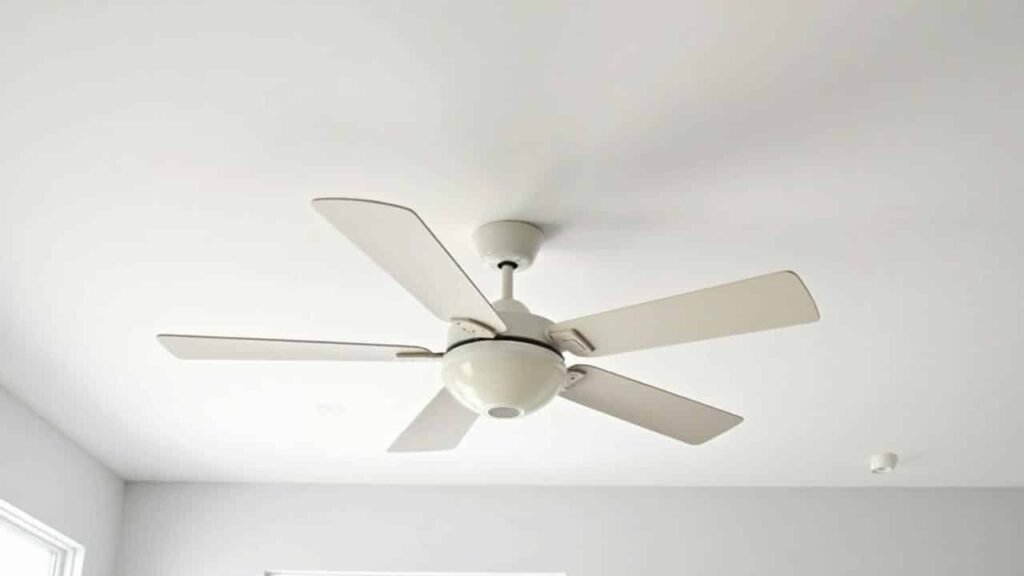
Create a “sound curtain” — a soft wall of steady, low sound that fills the room. The simplest setup: point a quiet box fan or air purifier toward a wall or corner so the air washes the surface rather than your face. Add a low, warm noise track (brown noise works well) from a small speaker at the foot of the bed.
Set volume just enough to blur the edges of outside noise, not to drown the room. Start low and nudge until sudden sounds feel softened. Close the door most of the way and place a fabric draft blocker along the threshold to stop sound leaking under it like light.
Common mistake: blasting white noise too loud and too bright. That’s fatiguing, and you’ll wake groggy. Aim for a gentle, even layer, not a jet engine. Let’s be honest: nobody calibrates decibels at bedtime. Use the talk test — you should hear your own whisper up close, and voices in the next room should fade into the blend.
Another pitfall is aiming the fan at your face. That dries you out and adds a tickle. Aim at a wall so the sound is diffused. If the room feels chilly, drop the fan to low and let the noise track carry the curtain.
In practice, it takes two minutes. Fan on low toward the wall. Brown noise at a warm, round level. Door almost closed, the floor gap cushioned. Then leave the room to its own weather.
“The point isn’t to get silence. The point is to give your brain one story to follow, so it stops rewriting the night.”
- Choose your tone: Brown noise (deeper) is softer than white noise (hissier).
- Find the sweet spot: Aim around the feel of a distant shower, not a storm.
- Place sound low in the room; it feels grounded and less sharp.
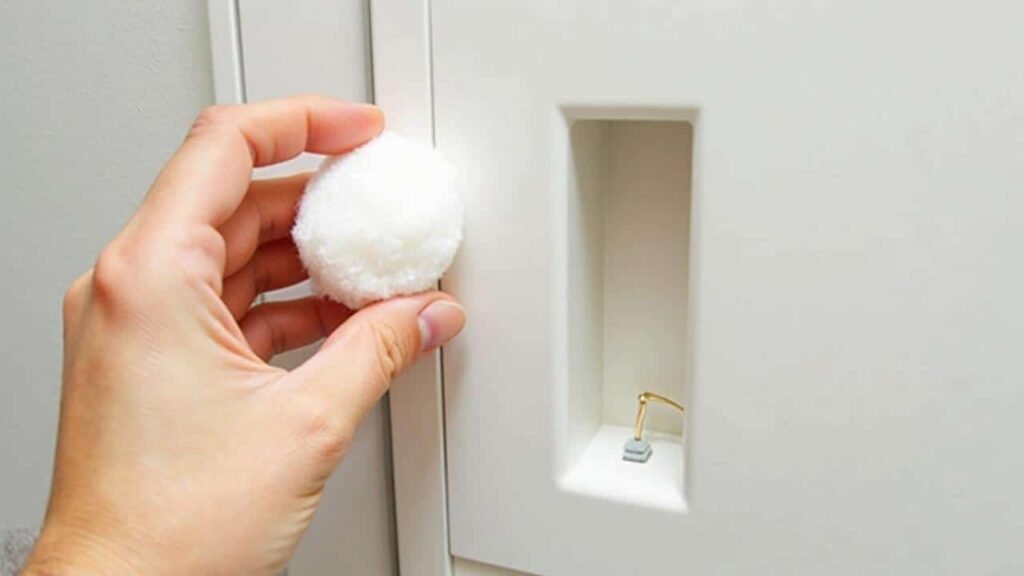
- Draft-block the door gap; small gaps, big leaks.
- If you share a bed, agree on the tone before sleep — small tweaks matter.
What changes when the room has a sound of its own
Two things tend to shift first: fewer full awakenings and shorter wake windows. You’ll still roll, scratch, dream. The difference is you won’t get yanked to attention by the dishwasher downstairs or the bin truck at dawn.
Over a week, mornings feel less brittle. Your mind hasn’t been negotiating with every passing sound like a bouncer at the door. *You wake with a little more slack in the rope.* The city, the house, the neighbors still exist — they’re just farther away.
On the odd night, the curtain won’t solve everything. Stress finds a way. That’s okay. The trick is a foundation, not a miracle. And once you feel it, you’ll notice how many tiny noises were taxing you all along.
There’s also a bonus nobody mentions: ritual. Flipping the fan, tapping the noise track, dropping the door to a thumb’s width — it signals your system that night mode is on. The body loves patterns more than promises. You’re not forcing sleep; you’re making room for it.
If you move a lot for work or share walls, this travels well. A small clip-on fan, a phone, a soft door sweep in your bag, done. It beats battling squeaky pipes in a hotel at 1 a.m. by doom-scrolling.
One last nudge for the lightest sleepers: pair the sound curtain with low red light at floor level for bathroom trips. No overhead blasts. You keep your melatonin rhythm, and the room’s sound holds steady when you return. That quiet confidence is half the game.
What if you don’t like noise at night? Try the fan-only version with the motor tucked behind a chair to mellow the tone. Or flip to a “rain on leaves” track with no melodies, no birds. If you prefer cooler air, the fan earns its keep twice — comfort and sound.
Some people discover the opposite: the room was too silent. In deep countryside, every twig crack became an event. The curtain turns a black-and-white film into a gentle hum. A little texture, less drama.
None of this pushes you into sleep you don’t want. It just rescales the night so small sounds stay small. That’s the trick inside the trick.
The sound curtain won’t fix a bad mattress or caffeine at 10 p.m. It will, though, turn your bedroom into a space that forgives imperfect nights. Friends who try it often send the same sleepy text the next week: “Didn’t wake for the elevator.” Not thrilling, utterly life-changing.
And if you’re skeptical, borrow a fan before you buy anything. Give it three nights. Your brain needs time to learn the new baseline and stop jumping at shadows. It adapts fast, given the chance.
On nights when storms roll in or neighbors wobble home, the curtain is the buffer that keeps those worlds politely outside. You’re not fighting noise anymore. You’re letting it pass right through.
Maybe this is what good sleep looks like for light sleepers — not silence, but a room with a voice of its own. Share it with a partner, a neighbor with thin walls, the friend who lives above a bar. The trick is small, and that’s the beauty. Big change, low effort. The kind of fix that hides in plain sight once you know it’s there.
| Point clé | Détail | Intérêt pour le lecteur |
|---|---|---|
| Build a “sound curtain” | Fan toward a wall + low brown noise + door almost closed | Reduces contrast from sudden sounds that wake you |
| Volume sweet spot | Feel of distant shower; whispers near you still audible | Mask noise without fatigue or grogginess |
| Plug the leakage points | Fabric draft blocker under the door; low speaker placement | Stronger masking with less actual volume |
FAQ :
- Isn’t white noise bad for hearing long-term?At comfortable volumes similar to a shower in the next room, it isn’t harmful. Keep it gentle; the goal is masking, not blasting.
- What’s the difference between white, pink, and brown noise?White is hissy and bright, pink is softer, brown is deepest. Many light sleepers find brown noise less sharp and more soothing.
- Can I use just a fan without a noise track?Yes. A fan’s motor can be enough. Point it at a wall or corner to diffuse the tone and avoid a draft on your face.
- Will this help if my partner snores?It can blunt softer snores. For loud or irregular snoring, combine the curtain with side-sleeping aids or discuss medical options.
- What if I wake for bathroom trips?Keep a dim red light near the floor and avoid overhead lights. The room’s sound remains steady, so falling back asleep is easier.