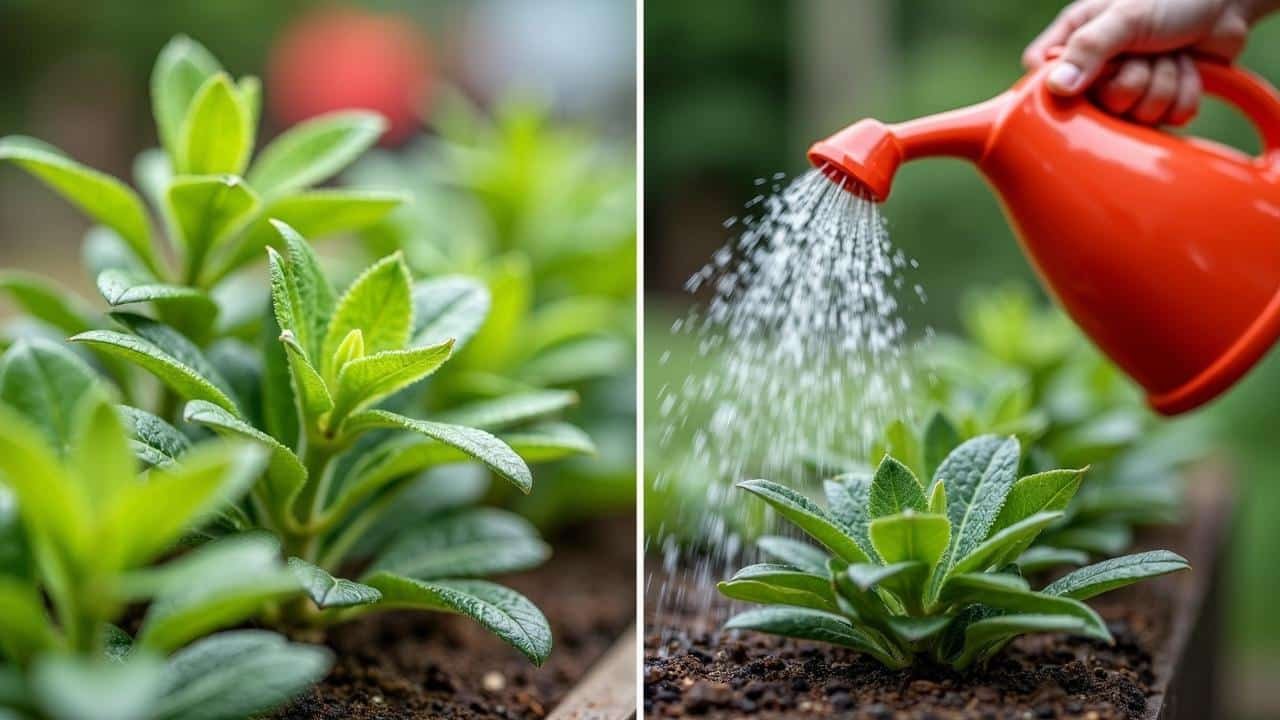
Most of us lug the hose out after work, spraying thirsty leaves in the soft blue of evening and hoping for the best. Gardeners are now whispering about a different window, a slim slice of time that looks almost too quiet to matter. It does.
m., robe tied in a knot, the kettle on one side of the porch and a coil of hose on the other. The sky hadn’t decided between night and day yet, and the sparrows were still practicing. She let the water run low and slow, moving from tomatoes to dahlias, then over to a lemon tree that looked like it had been holding its breath. The street was still dark. I asked her why on earth she was doing this before sunrise, and she smiled the smile of someone who learned a trick and won’t go back. The timing was the trick.
Why the quiet hour before sunrise changes everything

Gardeners who swear by the pre-dawn window talk about it like a cheat code for plant health, because everything lines up in that hour. The air is cool and still, the soil hasn’t yet started radiating the previous day’s heat, and the sun is minutes away, which means leaves dry quickly after watering. **Watering at first light cuts waste and stress in half.** You don’t fight wind drift or midday evaporation, and you don’t leave foliage wet all night, which is when fungi get bold.
We’ve all had that moment when a cherished plant sags at 6 p.m., and instinct says grab the watering can right then. A community garden in my city ran a simple trial across two identical beds of peppers and basil: one watered around 5 a.m., the other at 7 p.m., both with the same total volume each week. By late July, the pre-dawn bed had thicker stems, fewer yellowing leaves, and noticeably cleaner foliage, while the evening bed quietly grew a patch of powdery mildew that crawled up the basil like smoke. The difference wasn’t drama. It was rhythm.
Plants open their stomata as light approaches, priming for photosynthesis and movement of water through their tissues, and roots pull most effectively when the surrounding soil is cool and oxygenated. In that thin pre-sunrise moment, water sinks by gravity and is wicked by capillary action deeper into the profile, right where fine feeder roots sip. **Evening watering feels kind, but it often fuels disease.** Left overnight, wet leaves invite spores, and surfaces stay damp for hours without UV and warmth to dry them. Morning gives your plants a drink, then the day does the drying, like the world is lending you a hand.
How to water in the pre-dawn window, step by step

Set your schedule for the hour before sunrise, not just “early morning.” That might be 4:45–5:45 a.m. midsummer, a little later in spring. Start by checking the top two inches of soil with a finger or a trowel; if it’s dry down to your first knuckle, it’s time. Use a low-flow setting or soaker hose and aim for a slow, deep soak that penetrates 6–8 inches, which is where most vegetable and flower roots actually feed. **In pre-dawn, every drop travels further.**
Work bed by bed to avoid rushing, and water the base of the plant rather than the leaves, letting the spray hit the soil, not the stems. If you use containers, water until you see a steady trickle from the drainage holes, then pause and water again to break surface tension and reach pockets that stay stubbornly dry. Let’s be honest: nobody does this every day. That’s okay—consistency over perfection wins in gardens, so tie the habit to something you already do at that hour, like starting coffee or lacing shoes for a walk.
People often overcorrect and water icy-cold from the tap at full blast, which compacts soil and shocks roots; a gentler flow gives time for absorption and keeps fine particles from sealing the surface. If heat is building, plan a deeper session before the hottest day of a stretch and then leave plants alone midday, even if leaves flag slightly—they’re protecting themselves. What you’re after is a steady moisture profile, not a daily splash.
“Water when the light is coming but the sun is still behind the trees,” says June, a market grower with hands that remember drought years. “That way the plant can drink, then greet the day without staying wet like a cold shirt.”

- Target: the hour before sunrise.
- Method: slow flow at the root zone, 6–8 inches deep.
- Frequency: when top 2 inches are dry; containers need more.
- Tools: soaker hoses, drip lines, or a watering can with a rose.
- Bonus: mulch to hold that precious pre-dawn moisture.
What this tiny moment teaches us about care
The magic isn’t mystical, it’s about listening to a living cycle and adding your effort at the one point where it multiplies. That’s why seasoned gardeners turn on irrigation at 5 a.m., why front-yard growers shuffle out in slippers with a mug, why orchardists time their runs to dawn and not to dinner. When the sun lifts, leaves shed excess water fast, roots already have what they need, and the plant meets heat with reserves rather than panic. You might still water in the evening when life gets noisy, and your garden won’t collapse. The shift worth trying is to give dawn a week or two and watch what changes—less mildew, deeper color, stronger new growth, and soil that stays evenly damp under mulch. The act is the same, but the moment turns it into momentum.
| Point clé | Détail | Intérêt pour le lecteur |
|---|---|---|
| Water between first light and sunrise | Cool air, quick leaf dry-down, minimal evaporation | Healthier plants with fewer fungal problems |
| Aim for a deep soak | 6–8 inches into the root zone, slow flow | Stronger roots and longer intervals between sessions |
| Let soil be your clock | Water when top 2 inches are dry, not by calendar | Less waste, better growth, fewer stress swings |
FAQ :
- Is watering at night really that bad?Not always, but wet leaves that stay damp for hours raise the odds of mildew and leaf spot; dawn gives you moisture plus a fast dry-down.
- What should I do during a heatwave?Give a deeper pre-dawn watering the day before the hottest spike, then top up pre-dawn as needed; resist midday watering unless a plant is at risk of death.
- Can I automate this timing?Yes—use a simple programmable timer on a soaker or drip line and set it for the hour before sunrise, adjusting seasonally.
- How much should I water containers?Water until it drains, pause, then water again; pots dry faster, so expect daily pre-dawn sessions in peak summer and every other day in cooler weeks.
- Is tap water okay for sensitive plants?Mostly yes; let chlorinated water sit overnight if you can, or collect rainwater for acid-loving plants like blueberries and some ferns.