It often starts inside the machine you trust most.

Your washer works hard, then sits damp and warm. Residue builds up. Microbes settle in. A simple pantry routine can reset the balance and keep clothes smelling like they should.
Why your washing machine smells
Modern washers use less water, which saves energy but leaves more residue behind. Detergent that never fully rinses away feeds bacteria and mildew. Fabric softener adds waxy film. Pet hair and lint trap moisture. A cool home or a closed door slows drying. Together, those factors make a stale, basement-like aroma.
Vinegar and baking soda address different parts of that problem. Vinegar’s mild acidity reduces mineral film and targets odor-causing bacteria. Baking soda acts as a gentle scrub and a deodorizer. Used in sequence, they reset a smelly drum without harsh chemicals.
Run baking soda first to refresh and deodorize. Follow with hot-cycle vinegar to break down residue and target odors at the source.

The vinegar and baking soda method, step by step
What you need
- Fresh baking soda (replace any box older than two years)
- Distilled white vinegar (5% acidity, food grade)
- Soft sponge or microfiber cloth
- Old toothbrush for crevices
Dosage and cycles
| Washer type | Baking soda | Vinegar | Cycle |
|---|---|---|---|
| Top-loader | 1 cup in the drum | 2 cups in detergent, softener, and bleach trays | Use hottest setting or self-clean/heavy-duty |
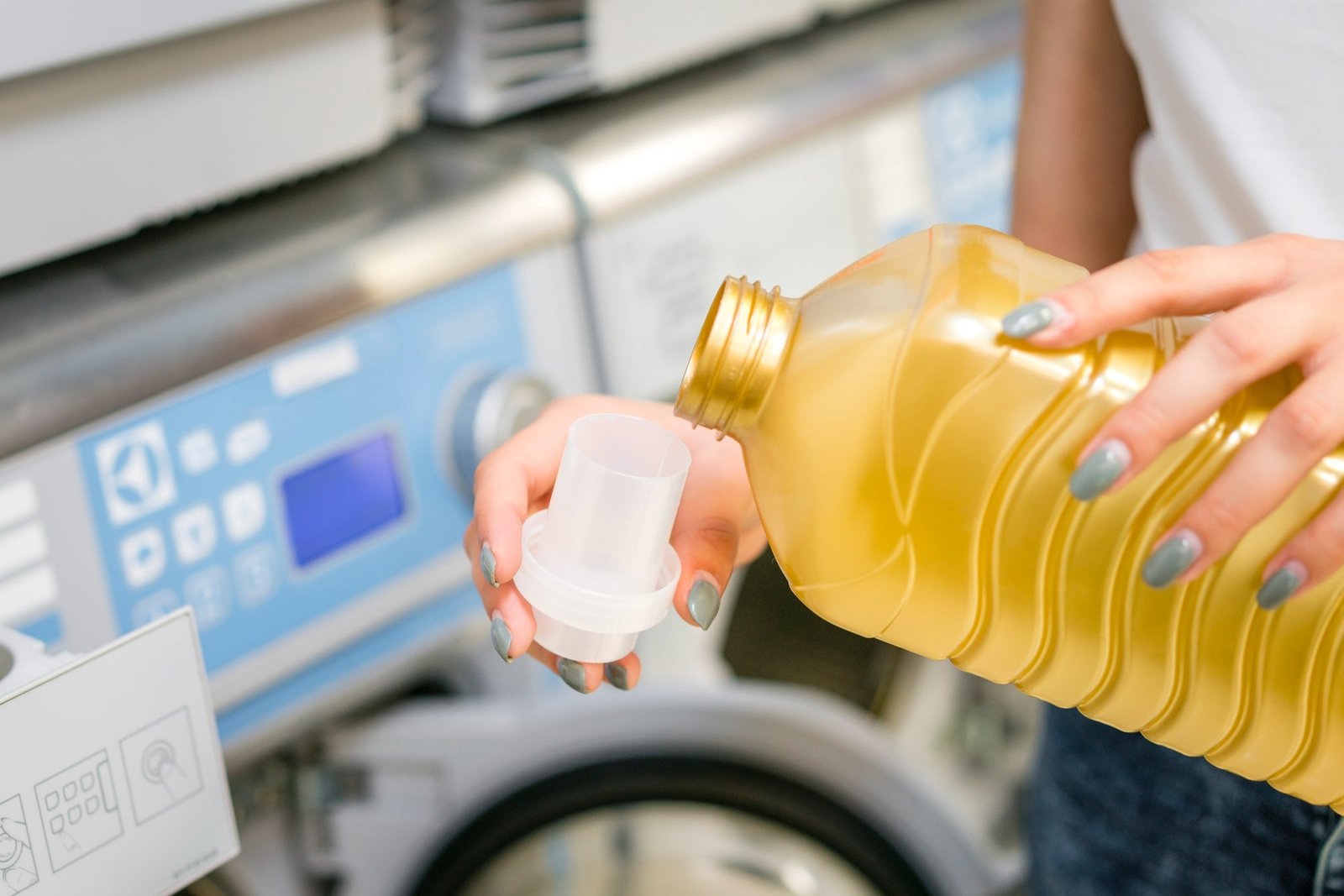
| Front-loader | 1/2 cup in the drum | 2 cups split across all dispensers | Use hottest setting or self-clean |
- Step 1: Run a hot cycle with only baking soda in an empty machine. This loosens grime and knocks back odors.
- Step 2: When finished, add vinegar to every dispenser. Run the hottest full cycle again. This targets residue in hoses and internal channels.
- Step 3: Wipe the drum, door, and rubber seal dry. Prop the door open to air out the machine.
Never mix vinegar with bleach. Combining acids with chlorine products can release dangerous gas.
Deep-clean hot spots most people miss
If smells return quickly, build-up likely lives in hidden parts. A focused clean reaches those zones and buys you more time between refreshes.
Gasket and door area (front-loaders)
- Gently pull back the lower lip of the rubber gasket. Remove lint, pet hair, and trapped water.
- Scrub the folds with a toothbrush and warm, soapy water. Rinse and dry thoroughly.
- Wipe the glass door and the rim where the gasket meets the frame.
Agitator and drum (top-loaders)
- If the agitator shell lifts out easily, remove it. Soak in hot, soapy water and scrub.
- Wipe the inner tub perforations. Residue often clings around the holes and under the rim.
Dispenser drawers and channels
- Slide out the detergent tray. Soak it. Scrub away softener film and powdered detergent crust.
- Clean the cavity where the tray sits. A bottle brush or toothbrush helps reach the back corners.
Filter and drain pump
- Check your manual for the filter location. Many machines have a front access flap near the floor.
- Place a tray and towel under the flap. Open slowly to drain water.
- Remove coins, hair ties, and sludge. Rinse the filter before reinstalling.
Most persistent odors hide in the gasket folds, dispenser channels, and drain filter. Clean those areas and the drum refresh lasts longer.
How often to do it
- Heavy use households: quick baking soda and vinegar refresh every month.
- Average use: every 6–8 weeks.
- Deep clean of gaskets, drawers, and filters: every 2–3 months.
Keep odors from coming back
- Leave the door or lid ajar after each load to let the interior dry.
- Use the right amount of detergent. Too much soap equals more residue. Follow the “lines,” not guesses.
- Skip fabric softener for towels and sportswear. It traps odors. Consider dryer balls.
- Run a hot wash with no clothes after frequent cold cycles. Heat helps break biofilm.
- Shake out pet hair before washing. Hair clogs filters and feeds microbes.
Safety notes and pitfalls
- Do not use vinegar in every load. Frequent acid exposure can stress rubber seals and hoses over time.
- Avoid mixing any acid with chlorine bleach. That includes vinegar and citric acid.
- Check your handbook before using “self-clean” modes. Some machines lock the door and run very hot cycles.
- Replace the door gasket if you see cracks, black mold growth embedded in the rubber, or persistent leaks.
Hard water, limescale, and HE machines
Mineral-heavy water accelerates film build-up and dulls stainless steel. Vinegar helps with light scale. For stubborn limescale bands, a dedicated descaler or food-grade citric acid works well in a separate hot cycle, used sparingly to protect seals. Always run a clear-water rinse after any acid cycle.
High-efficiency machines benefit from HE-labeled detergents. These produce fewer suds, which means less residue. If suds linger on the door or drum after a cycle, reduce detergent by 25% and test again.
When a smell signals a bigger issue
- Rotten-egg odor during drain: suspect a plumbing trap or standpipe issue rather than the washer. A plumber can inspect venting and traps.
- Burnt scent on spin: check the belt for wear and the motor for overheating.
- Water left in the drum: inspect the drain pump, filter, and hose for blockages.
Cost, time, and what to expect
This routine costs a few pounds or dollars at most. A full refresh with two hot cycles takes about two hours of machine time and 20 minutes of hands-on cleaning. Odors should fade after the vinegar cycle. If not, target the gasket, filter, and dispenser, then repeat the vinegar cycle once.
Extra tips that make a real difference
- Open the detergent drawer between washes to dry the channel.
- Wipe the rubber seal after washing heavily soiled items or pet bedding.
- Run towels and gym gear on hot weekly to keep biofilm in check.
- Swap softener for a cup of white vinegar in the softener tray occasionally for towels, but not every load.
If you want a simple maintenance schedule, set a calendar note. Do the baking soda and vinegar combo the first weekend of the month. Rotate in a drawer-and-gasket scrub on the second month. Add a filter clean on the third. That rhythm keeps things fresh with minimal effort.
For households in very humid climates or tiny flats, airflow matters as much as cleaning. Keep the laundry door ajar, run a dehumidifier nearby if moisture lingers, and avoid leaving wet clothes in the drum. Dry air slows mold and makes every refresh last longer.