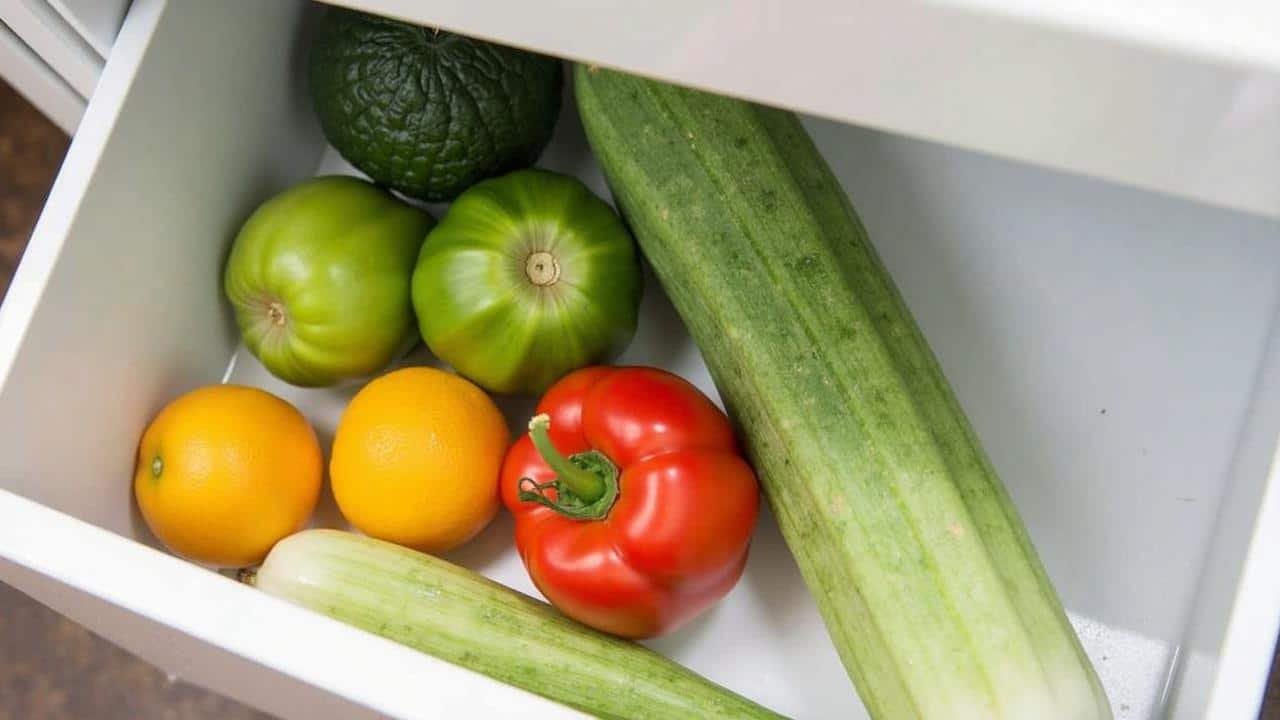
The cilantro you needed for taco night turns to green mush. The answer isn’t another specialty container or a miracle spray. It’s sitting in your fridge right now, hiding in plain sight.

The drawer slid open with a lazy sigh, revealing a nest of limp spinach that had sworn it would survive the week. I could hear the familiar tsk in my head: money down the drain, dinner plans rearranged, guilt landing with a soft thud. We’ve all had that moment when the crisper feels like a tiny compost bin with a light. Then a produce manager showed me a small piece of plastic I’d never touched—the humidity slider—and everything changed. He flicked it, almost bored, like turning a page. My greens stayed crisp. Carrots stopped going rubbery. Apples stopped bossing everyone around with ethylene. The fix wasn’t fancy. It was a tiny move that makes a big difference. A drawer became a climate.
The tiny slider almost everyone ignores
I’d looked at those sliders a hundred times and assumed they were decorative, like the fake fireplace on a TV. One side says “Fruit,” the other “Veg,” and we toss in whatever fits, hoping for the best. **Your crisper is a climate control chamber.** Close the vent and you trap humidity for thirsty greens. Open it and you let moisture and ethylene escape, which keeps emitters from choking everything else. That’s it. A thumb-width lever sets the weather your food lives in—rainforest on the left, breezy hillside on the right.
At a Saturday market, I met Lila, a café owner who buys cases of kale and romaine. She told me she used to lose a quarter of her greens by midweek. Then she split her fridge drawers by role: left drawer on high humidity for leaves and roots, right drawer on low humidity for apples, pears, and avocados. Her waste dropped so much she stopped doing last-minute lettuce runs. It matched what food-waste researchers keep finding: produce is the most likely thing we toss, and tiny storage tweaks cut that in a way you can taste.

Here’s the logic in plain English. Leaves wilt when they lose water faster than they can hold it; high humidity slows that escape, like pulling a blanket over them. Carrots and celery want that same moist air so they don’t go bendy. Ethylene, the ripening gas many fruits release, speeds softening and rot in neighbors; a vented, lower-humidity drawer lets that gas drift out and prevents condensation puddles. Open vent equals drier air and quicker gas turnover. Closed vent equals cozy, damp air with fewer drafts. It isn’t a gadget. It’s physics with a handle.
Do this to your drawers tonight
Pick a drawer to be your “Leaf Room.” Slide the vent to closed or “Vegetables.” Drop in a clean, dry tea towel as a liner. Fill it with lettuces, herbs, carrots, broccoli, celery—anything that wilts. Spin greens dry if you rinse, then tuck them into a breathable bag with a sheet of paper towel. **Label the other drawer “Fruit Room.”** Slide that vent open or set it to “Fruit.” Park apples, pears, avocados, kiwis, stone fruit there. Keep mushrooms in a paper bag inside that drawer. Potatoes and onions stay out of the fridge; tomatoes prefer the counter until fully ripe.
A few guardrails keep the system humming. Don’t mix apples with lettuce; give them the Fruit Room and a little space. Skip stuffing drawers to the brim, because air still needs to move a bit. Swap the towel liner when it feels damp. If you’re short on time, rinse-and-spin once on shopping day and be done—*yes, a single, decent wash works.* Let’s be honest: nobody really does that every day. If herbs are drama queens in your kitchen, treat delicate ones like a bouquet in a jar with a loose bag hat, then slide that jar into the Leaf Room.

Think of this less like storage and more like zoning your kitchen’s mini-climate.
“I tell customers the slider is the cheapest upgrade in the grocery store,” a produce manager in Denver told me. “You already paid for fresh. The slider helps you actually eat it.”
- Leaf Room (high humidity, vent closed): lettuces, spinach, kale, herbs, carrots, celery, broccoli.
- Fruit Room (low humidity, vent open): apples, pears, avocados, kiwis, stone fruit, mushrooms in paper.
- Line drawers with a dry towel and change it weekly.
- Wash greens once, spin dry, store in breathable bag with a paper towel.
- Keep ethylene emitters away from delicate greens.
The habit that quietly changes your week
Once the drawers are set, meals calm down. The Thursday salad isn’t a chore because the romaine still snaps. Cilantro hangs on long enough for that second taco night. You start buying what you love instead of what you know will “survive.” **Small, repeatable wins make cooking feel less like a rescue mission and more like a choice.** The drawer trick doesn’t ask you to be a new person; it asks you to flick a switch and let your fridge do its job. And when less goes slimy, less goes in the trash, which means more of your food budget lands on your plate.
| Point clé | Détail | Intérêt pour le lecteur |
|---|---|---|
| Use both drawers with intent | One on high humidity for leaves/roots, one on low for ethylene fruits | Longer shelf life without new gear |
| Line with a towel | Dry cloth catches condensation; swap when damp | Less slime, fewer off smells |
| Separate emitters from sensitives | Keep apples, pears, avocados away from lettuces and herbs | Crisper greens, fewer surprise spoilage events |
FAQ :
- How do I know which setting is high or low humidity?Closed vent or “Vegetables” equals high humidity; open vent or “Fruit” equals low humidity.
- What if my fridge has only one crisper drawer?Create zones: use perforated produce bags to mimic high humidity for greens, and keep fruits in a shallow bin above the drawer to vent ethylene.
- Should I wash greens before storing?Either wash-and-spin once, then store with a paper towel, or keep unwashed and rinse before eating. Both work if you manage moisture.
- Why line the drawer with a towel?It wicks excess condensation, limiting slime and slowing microbes that love standing water.
- Which fruits produce the most ethylene?Apples, pears, avocados, kiwis, stone fruit, and ripe bananas; keep them in the low-humidity, vent-open drawer.