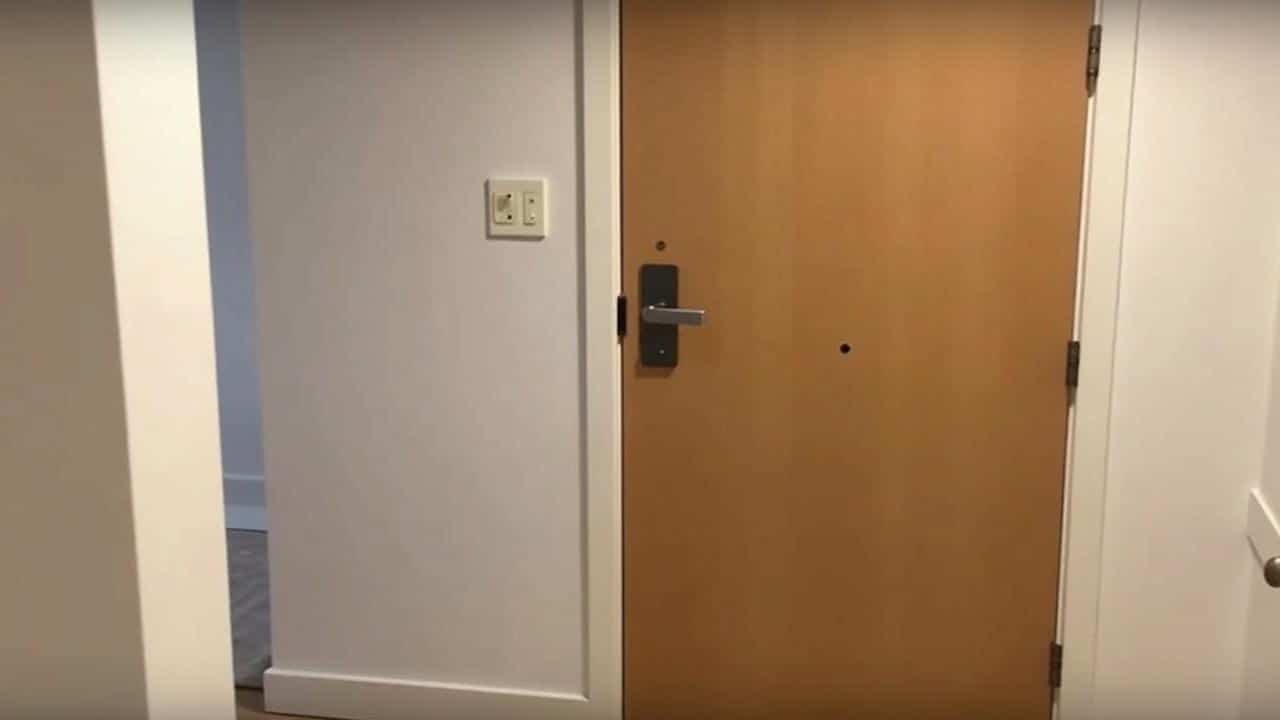
Most homeowners don’t try it because they reach for the spray they already own. That’s the trap. The real cure happens at the hinge pin, not on the paint.

It was a small sound at first, the kind you forgive at 6 a.m. when you’re tiptoeing to the kitchen. Then it grew teeth. The hallway door announced every night drink of water, every early Zoom, every stealth snack with a long, high creak that felt personal. One evening my neighbor, Maya, held up a hammer and a can in the porch light and said, “Ten minutes. You’ll hate that you didn’t do this last year.”
We pulled a hinge pin, polished a line of invisible grime off the metal, and let a dry film of PTFE cure while the dog blinked at us. The next click of the latch was a whisper. *It was almost too quiet.*
Silence arrived in ten minutes.
The real reason your door screams

A squeak is friction trapped in a tiny tube of metal called the hinge knuckle. Dust drifts in, humidity swells the wood, the door sags a hair, and the pin rubs the knuckle’s inner wall. That high note you hear is warmed-up metal singing under stress.
We’ve all had that moment when you pause with your hand on the knob, calculating if the squeal will wake someone. Maya did too. Her nursery door was the loudest in the house. She tried a quick spritz from the blue-and-yellow can and won a week of peace. Then the noise came back like it had paid rent.
Oils work fast, but they also pull in dust and thicken over time. That gunk becomes sandpaper on the pin. Add a slightly loose top hinge and the pin starts scraping at an angle, which is the sound you hear. The lesson is boring and true: fix the alignment and switch to a dry lubricant that cures to a film. The noise leaves for years.
The method homeowners regret not trying earlier

Here’s the simple routine: pop the hinge pin, clean it, coat it, then correct the hinge. Start by closing the door until it almost latches, then tap the pin up with a nail and a gentle hammer. Rub the pin with fine steel wool or a scrub pad, wipe with alcohol, and let it dry. Spray a light coat of PTFE dry lube on the pin and into the knuckle, wait a minute, then reinsert the pin with the rounded end up. Finish by snugging all hinge screws and drive one 3-inch screw through the top hinge into the framing. That last step quietly fixes sag.
Two notes from the trenches. Don’t flood the hinge with oil “just in case.” It attracts dust and can stain the trim. Give the dry lube a pause to set before swinging the door. The pin should slide smoothly, not swim. Let’s be honest: nobody does that every day. That’s why this once-and-done routine wins.
“Noise is friction you can plan for. Remove the friction, not just the sound.” — a carpenter who’s seen every door mistake
- The quiet-pin method: pull, polish, dry-lube, re-seat
- Tools: hammer, nail/punch, fine steel wool, cloth, isopropyl alcohol
- Lube: PTFE dry spray or graphite, not cooking oil
- 3-inch screw fix: top hinge to framing to cure micro-sag
What not to do and what to do instead
Skipping the clean step is the classic error. People spray over grit and make a gritty syrup. Wipe the pin until the cloth stays clean, then lube. If a pin is stubborn, support the hinge with a wood block and tap gently upward. No brute force. The pin wants to leave the party if you invite it nicely.
Skip the WD-40 trap. It’s a great solvent, a so-so long-term lubricant. If you already used it, no shame. Just wipe the pin, let it dry, and switch to PTFE or graphite. Another miss: tightening only the middle hinge. The top hinge carries the weight. A single long screw into the stud can make a squeak vanish like a magic trick.
One more reality check: doors live in weather. Summer swell, winter shrink. If the sound returns years later, repeat the clean-and-coat in ten minutes flat. No drama, no stains, no midnight apologies in the hallway.
When quiet takes over the house
The strange thing about a quiet door is how you move differently. You don’t hesitate at the threshold. The toddler keeps sleeping. The night feels intact. Tiny noises run a tab you don’t notice until they’re gone, and then you think, why did I live with that for so long?
Friends will ask which brand you bought. The trick isn’t a brand. It’s the little ritual of pulling the pin, treating the metal, and correcting sag with one honest screw into solid wood. Your house rewards attention in that exact scale—small gestures, outsized results. The calm is not fancy. It’s intentional.
If this story does anything, maybe it pushes one more person to try the fix tonight. A door is a door until it stops squeaking, and then it’s a hush you notice every time you walk through. That quiet pays you back daily.
The 10-minute walkthrough
Close the door until it’s near latched. Find the small seam under the hinge pin. Place a nail or punch under the pin lip and tap up with a hammer. Pull the pin with fingers or pliers. Lay it on a towel. If paint sticks, score the edge with a utility blade first to avoid chips.
Polish the pin with fine steel wool until it looks uniformly dull silver, not streaked. Wipe with isopropyl alcohol. Give the inside of the hinge barrel a blast of air or a twist of a dry cloth corner. Mist the pin with PTFE dry spray and count to 60 while it sets. Slide it back in, rounded end up, and tap gently home.
Now open and close the door twice. Listen. If you still hear a faint squeak, loosen the top hinge screws, lift the door a whisper with your fingers, retighten, and replace one short screw with a 3-inch wood screw into the stud. That tiny lift stops side-load on the pin. The squeak fades into memory.
| Point clé | Détail | Intérêt pour le lecteur |
|---|---|---|
| Clean before lube | Remove grime with steel wool and alcohol | Prevents grit from becoming abrasive paste |
| Use dry PTFE/graphite | Dries to a film that doesn’t attract dust | Longer-lasting silence, no oily drips |
| Fix micro-sag | Drive a 3-inch screw through the top hinge | Stops angled friction that causes squeaks |
FAQ :
- What lubricant actually works best for a lasting fix?PTFE dry spray or graphite. They cure to a dry film, which slips without collecting dust. Oil feels great on day one and noisy by week three.
- How long will this quiet last?In most homes, years. Doors that see steam or heavy use may want a quick refresh every year or two. The 3-inch screw alignment often extends the peace.
- Is WD-40 okay for squeaky hinges?It can quiet a hinge short-term because it’s a solvent with some lubrication. For a durable fix, clean the pin and switch to a dry lubricant after the WD-40 evaporates.
- What if the hinge pin is stuck and won’t budge?Support the hinge leaf with a wood block, tap the pin upward with a punch, and add a tiny bit of penetrating oil at the seam. If paint bridges the knuckle, score it first so the pin can move.
- Are ball-bearing hinges worth it for a “forever” fix?They’re fantastic on heavy doors. If you’re replacing hardware anyway, go for ball-bearing hinges. For most interior doors, the quiet-pin method delivers nearly the same silence at pocket change cost.