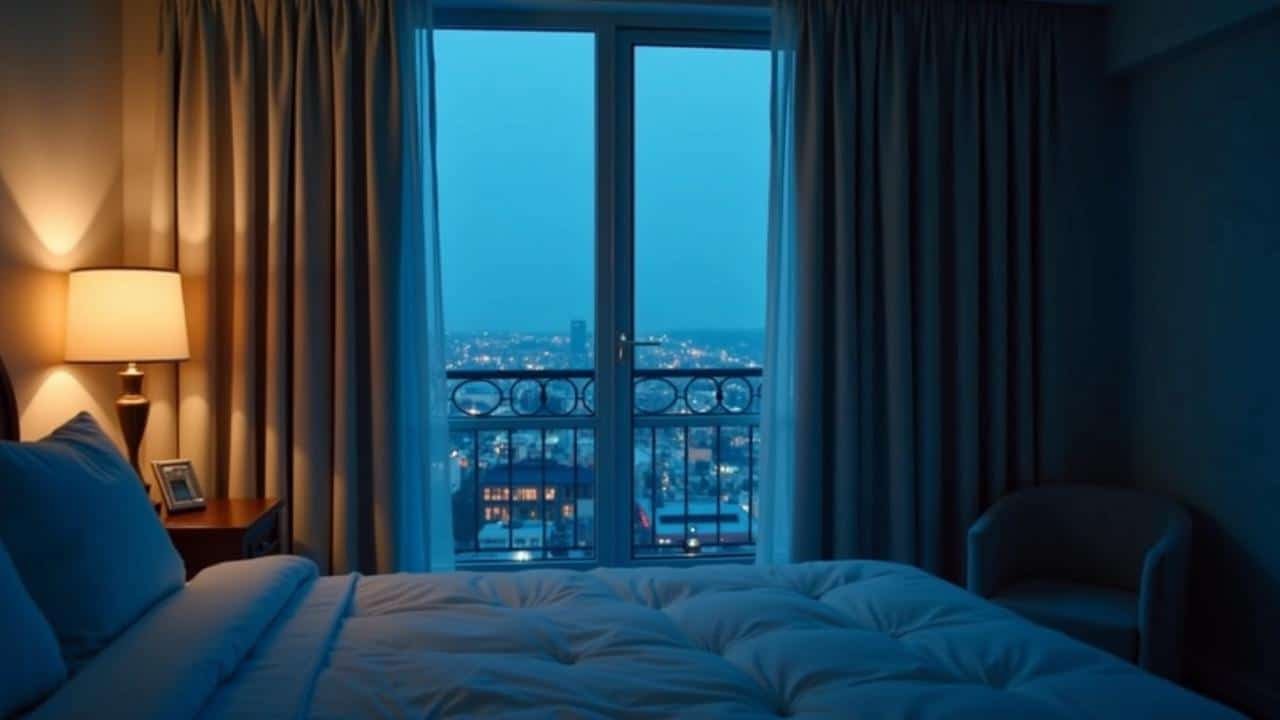
Then morning hits like a freight train, the alarm slicing the quiet, and we crawl out groggy, coffee as a crutch. What if the fix wasn’t more blackout—but a slimmer slice of dawn?

At 6:41 a.m., a thin ribbon of light slips across the bedroom wall, then lands on your hands. The room is still, cool, and your eyelids decide to wake a few minutes before the alarm. No jolt. No scramble. You turn, stretch, and feel oddly clear. Outside, the birds have been at it for a while, and the sky is changing in slow motion. A few weeks ago, you would have missed this—your curtains clamped shut, your brain yanked out of sleep like a plug from a socket.
A two-inch gap did the trick.
Letting the morning find you
Leave your curtains slightly open, and your brain starts getting **natural light cues** before your phone ever buzzes. It’s not bright enough to blast you awake at 2 a.m. It’s just enough to start the gentle chemistry of morning. Melatonin begins to ebb. Body temperature starts to rise. Cortisol nudges up at the right time. That first light isn’t just pretty—it carries a message your circadian clock understands.

I spoke with a nurse who swore her weekends felt “less heavy” after she stopped blacking out her room. She leaves a two-finger gap facing the sky, not the street. Within a week, she noticed she wasn’t fighting the snooze button. There’s data behind that kind of shift. Morning light exposure—even through clouds—can hit 1,000 to 10,000 lux, far more than most indoor bulbs. People who see earlier daylight tend to feel sleepy earlier, and report steadier energy by late afternoon.
Why does a sliver help? Your eyes have special cells tuned to blue-enriched natural light. They send time-of-day signals straight to the brain’s clock. Indoor light at night runs around 100–300 lux. A streetlamp might leak 5–30 lux. Dawn through a narrow gap climbs slowly, teaching your system that morning is arriving, not ambushing it. That slow ramp cuts **sleep inertia**, the heavy fog you feel when the alarm bulldozes REM. The trick is small: let dawn in, block night glare.
How to crack the curtains without wrecking your night
Think small and deliberate. Aim for a gap about two fingers wide—roughly an inch or two. Place it where the sky shows but lamps don’t. If you have double curtains, create layers: blackout across most of the window, then a sheer slice on the gap side to soften light. Orient your bed so the light brushes the wall or floor, not your eyes. If the sun rises straight into your window, angle the gap toward a paler patch of sky.

Common mistakes start with opening too much, too fast. A fist-wide gap will wake you at 5 a.m. in June. Another trap: letting a direct streetlight pour in and wondering why your sleep feels choppy. We’ve all had that moment when night feels bright as a hallway. Start narrow and test for a week. If your schedule is chaotic, pair the gap with a dawn-simulating alarm on low brightness. Let’s be honest: nobody really does that every day.
One sleep scientist put it to me plainly:
“You don’t need a flood of light at night. You need a hint of morning before the alarm.”
Use this as your quick setup tonight:
- Open a 1–2 inch gap on the side facing away from direct lamps.
- Layer a sheer behind the gap to blur hotspots.
- Point the gap toward sky, not street or neighbors’ windows.
- Place your alarm 10 minutes later than usual and see if you wake first.
- On bright-summer mornings, tighten the gap by half.
What this small habit changes
Leave a slim line for dawn, and your mornings stop feeling like a launch sequence. The light grows; you wake in its draft. That shift bleeds into the day—steadier focus mid-morning, fewer yawns after lunch, an easier tilt toward evening tiredness. Night becomes night again. Morning belongs to morning.
There’s a psychological layer here too. A narrow, chosen opening feels different from a room sealed shut. It’s control without clamping down. It’s a **tiny ritual** that says, “I’m going with the rhythm, not against it.” You might still keep blackout for travel or tricky weeks. You might close up during a heat wave. But once you feel that *quiet dawn glow*, it’s hard to forget how kind it is.
The point isn’t perfection. It’s a workable rhythm in a lit-up world. A small gap is enough.
| Point clé | Détail | Intérêt pour le lecteur |
|---|---|---|
| Let dawn in, not night | Create a 1–2 inch gap angled toward sky, away from lamps | Smoother wake-up and less groggy mornings |
| Layer your light | Use blackout for most of the window, sheer on the gap side | Protects deep sleep while easing into daylight |
| Pair with habits | Get 10–30 minutes of natural light soon after waking | Stronger circadian rhythm and easier bedtime |
FAQ :
- What if a streetlight shines into my window?Angle the gap toward the darkest patch of sky, add a sheer behind it, or move the gap to the opposite curtain edge. If the glare is direct and bright, keep full blackout and try a dawn-simulating alarm.
- How wide should the gap be?Start with two fingers—about an inch or two. If you wake too early, shrink it. If you still feel slammed by the alarm, widen by half an inch.
- Will this make my room colder in winter?A small gap barely changes thermal insulation. Use thermal curtains for the main coverage and keep the slit minimal. The air seal stays mostly intact.
- What if I need to wake before sunrise?Use a sunrise alarm on low and keep a small gap for whatever early light exists. On truly dark mornings, the device does the ramp; the gap keeps weekends and later mornings consistent.
- I work night shifts—should I try this?If you sleep during the day, you want full darkness. Skip the gap and use a timed light to simulate “dawn” before your planned wake time.