There’s a quiet flavor thief in the pantry, and chefs say it sits just inches from your onions. Most home cooks stack them side by side without a thought. Then, somewhere between taco night and Sunday roast, the onions go flat, a little damp, and not quite themselves anymore.

I’m watching a line cook reach for a mesh bag, tug out a yellow bulb, and frown. The outside’s slick, the scent is muted, almost shy. He points to a crate of potatoes tucked underneath. “That’s the problem,” he mutters, like it’s a secret everyone knows but forgets. Later, in a home kitchen with a dim pantry and a wobbly shelf, I cut into an onion that should sing. It doesn’t. The bite is gone, the perfume dulled, the edges weirdly sweet. The culprit was sitting inches away.
The potato problem nobody talks about
Chefs keep repeating the same warning: storing onions right next to potatoes ruins their flavor. Onions want air, dryness, and a steady, cool room. Potatoes breathe moisture, need darkness, and live best in a slightly humid pocket. Put them together and the air shifts. The onion’s papery armor softens, and its sharp, clean hit turns blurry. The change is subtle at first, then obvious. You notice it in the pan when the sizzle smells heavy, not bright. You notice it at the table when the salsa lacks bite.
One chef told me his line started picking out “quiet onions” midweek, all from a bin that also held potatoes. Another ran a simple test: two bags of the same onions for ten days. One bag hung alone in a ventilated nook; the other sat by a sack of potatoes in a dark crate. The “potato side” onions softened faster and tasted dull, with a faint musty edge. Food scientists have a boring way to describe that shift—higher humidity and cross-respiration—but cooks feel it in their bones.

Here’s what’s happening. Potatoes are living things; they respire, releasing moisture and carbon dioxide. That raises local humidity and creates a cozy microclimate. Onions don’t like that. Their pungency depends on a delicate balance of sulfur compounds that break down under damp, stagnant air. Microbes wake up, skins lose crunch, flavors drift from peppery to muddled. Add a dark corner and you invite sprouting stress—another flavor drain. The onion isn’t “rotting,” it’s just changing pathways. And your pan gets the worst of it.
What chefs do instead
Chefs separate the worlds: onions here, potatoes there. Onions go in a cool, dry, well-ventilated spot—think 50–60°F, wire rack, mesh bag, air moving. Potatoes live in a darker, slightly more humid pocket—paper sack or a bin that breathes, away from the onions. If a bulb is cut, it goes in the fridge, tightly wrapped or in a glass container, and used within a couple of days. One small move changes everything: distance. A few feet is plenty. **Keep them apart and onions keep their bite.**
People mix them because it’s easy. One shelf, one basket, job done. We’ve all had that moment when space wins over sense. So create micro-zones with what you have. Hang a cheap mesh bag from a hook for onions. Give potatoes a lower drawer or a cardboard box lined with newspaper. Rotate what’s oldest to the front, and toss anything that starts to sprout or feel damp. Let air move. Let each ingredient breathe the way it wants. Let onions stay onions.

Common missteps are small but costly. Plastic bags around onions trap moisture. Stashing a sack by the dishwasher outlet warms and wets the air. Storing onions and potatoes in the same dark bin speeds the shift from crisp to foggy. Let’s be honest: nobody really does that every day. Start with one fix—separate the bins—and you’ll taste the difference by next week. Small distance, big flavor.
“Treat onions like you treat good salt—dry, within reach, and far from steam,” says a London chef who runs his pantry like a spice cabinet. “The moment they feel damp, they get quiet.”
- Don’t pair onions with potatoes — keep them at least a shelf apart.
- Onions: cool, dry, airy; Potatoes: cool, darker, slightly humid.
- Use mesh or paper for both; skip sealed plastic.
- Remove sprouting or soft bulbs fast to protect the rest.
- Bright flavor comes from dry skins and moving air.
The science the pan can taste
Onion pungency comes from sulfur precursors that turn lively when the cell walls break and meet the alliinase enzyme. High humidity nudges enzymes and microbes in new directions, trimming that snap. Potatoes nearby elevate water vapor and change the local gas mix, so onions respire more and store worse. The result isn’t dramatic rot at first—it’s a slow blurring of edges. A raw slice tastes tired. A sauté smells heavy. **A tiny climate mistake becomes a flavor tax.**
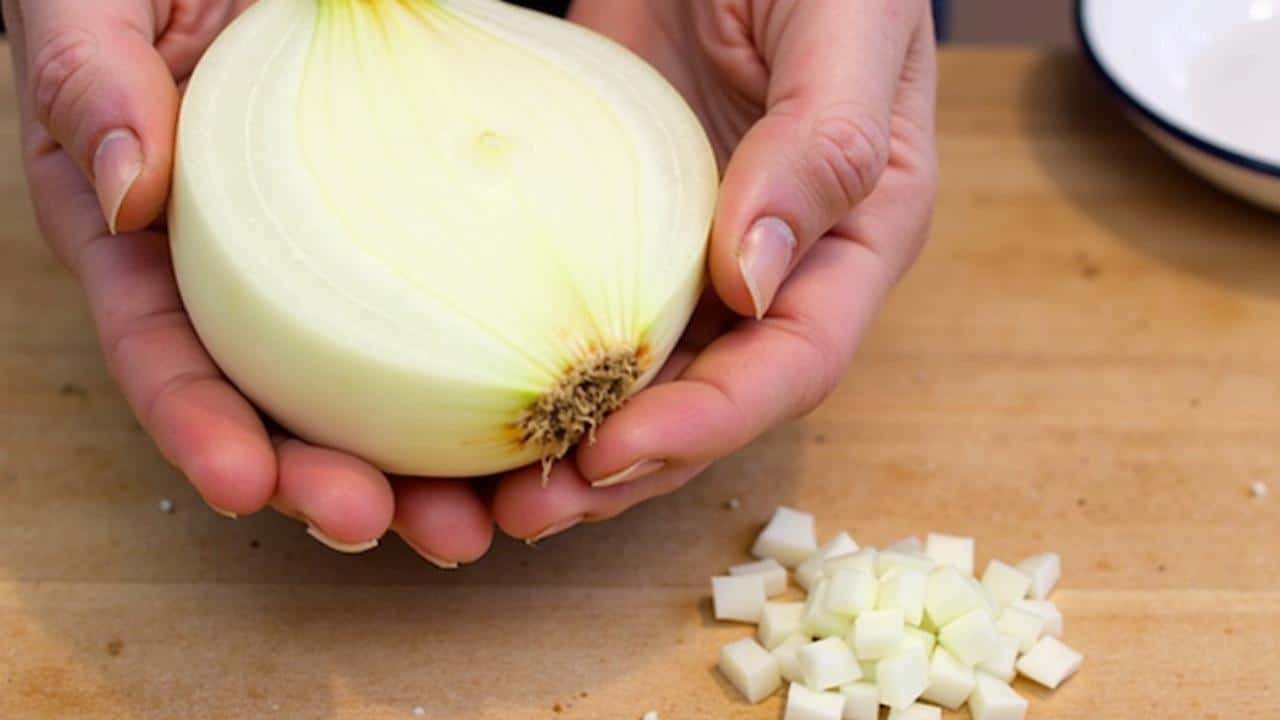
Throw in a real-world pantry and things stack up. A closet under the stairs runs warm after a laundry cycle. A fruit bowl sits nearby, and apples release ethylene that can push bulbs toward sprouting. The potato bin keeps the air moist to protect tubers, but the onion bag hanging just above it pays the price. You don’t need a lab to notice it. Trim a fresh, dry-stored onion and the knife feels crisp, the scent is bright, and your eyes sting a little. That’s the signal you want.
Chefs lean on three simple signals: look, feel, smell. Dry, tight skins that snap are good. Bulbs that feel light and papery are good. A clean, peppery aroma is good. If the skins are limp, the bulb feels damp, or there’s a basementy whiff, move them away from potatoes and give them air. Distance is free. Flavor is not.
A final thought from the pantry shelf
I keep walking into kitchens—restaurant back rooms, city apartments, farmhouse mudrooms—and seeing the same quiet duet: onions and potatoes sharing a corner like old friends. They don’t fight, but one goes quiet. Shift them a few feet apart and dinner tastes louder. That’s the whole trick. Not a gadget, not a chef-only hack, just a little space and some air. If you’ve ever wondered why your onions lost their bite halfway through the week, test it yourself. Separate them today and taste again in ten days. Share the results with a friend who swears it’s an old wives’ tale. Kitchens learn by doing, and flavors have long memories.
| Point clé | Détail | Intérêt pour le lecteur |
|---|---|---|
| Onions and potatoes don’t mix | Potatoes raise local humidity; onions lose pungency | Protects the sharp, bright flavor you want |
| Right storage, right microclimate | Onions: cool, dry, ventilated; Potatoes: cool, darker, slightly humid | Longer shelf life and better texture |
| Small distance, big payoff | Store them a few feet apart, in breathable bags | Fewer off-notes, better results in every dish |
FAQ :
- What is the “one ingredient” that ruins onion flavor?Potatoes. Their moisture and respiration create a microclimate that dulls onion pungency.
- How far apart should I store onions and potatoes?A shelf or a few feet is enough. Keep them in separate, breathable containers.
- Can I refrigerate whole onions?Whole onions prefer a cool, dry room with airflow. Refrigeration is fine for cut onions in sealed containers.
- Do potatoes make onions spoil faster?They can. Higher humidity and stagnant air around potatoes encourage sprouting stress and off aromas in onions.
- What bags should I use for storage?Mesh or paper for both. Avoid sealed plastic, which traps moisture and mutes flavor.