Yet the shell clings, the white tears, and your tidy breakfast turns into a dimpled battlefield. Cooks whisper about one absurdly simple fix: drop a teaspoon of baking soda into the boiling water. Does that tiny scoop really change the way an egg peels—or is it just kitchen folklore?

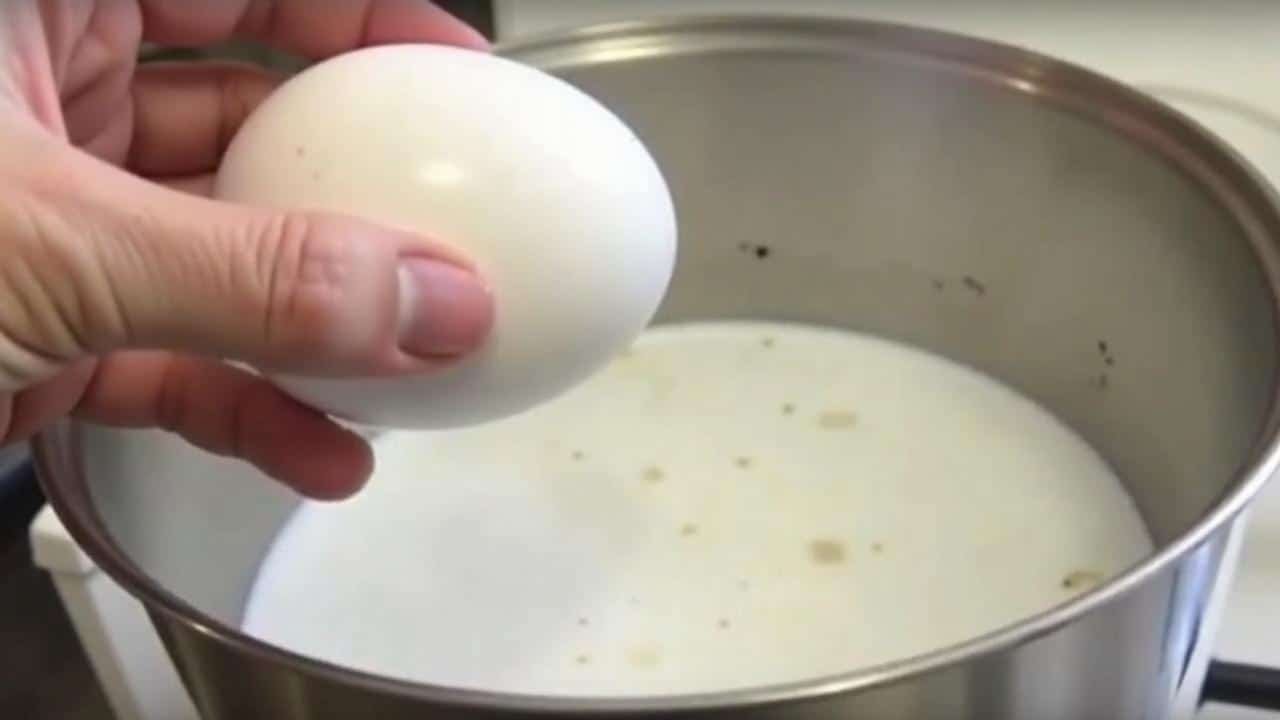
Steam fogs the window while the water trembles toward a boil, eggs lined up on the counter like little moons. I think of brunches gone sideways—deviled eggs that looked more “demolished,” salads with ragged whites, that quiet frustration when a shell refuses to let go. Then I add it: one unglamorous teaspoon of baking soda that fizzes into the swirl. A minute later, the kitchen smells warm and mineral, and I remember an old diner cook who swore this trick saved him hours every week. I pick up the first egg, crack, and peel. The shell slips off almost in one breath. One teaspoon changed everything.
The quiet science in your saucepan
Fresh eggs are stubborn creatures. Their whites cling to the inner membrane like glue, so peeling feels like you’re negotiating with drywall. We’ve all had that moment when the shell clings like Velcro and breakfast turns into confetti.
In a small kitchen test, I boiled two batches of six eggs each—same brand, same size. One pot got a teaspoon of baking soda, the other didn’t. The “plain” batch took me nine minutes to peel, with three eggs scarred and pitted. The baking soda batch? Four minutes total, and every egg came out smooth enough for a glossy deviled spread. Not lab science—just the kind that matters at 8 a.m.

Here’s what’s happening. Egg whites are mostly proteins suspended in water, naturally more acidic when the eggs are very fresh. Baking soda nudges the water’s pH upward, which weakens the bond between the white and that clingy inner membrane. The result is a clean break when you crack the shell. **Raise the pH, loosen the grip, and the peel slides like a zipper.** It’s not magic—it’s chemistry doing you a favor.
How to use the 1-teaspoon trick without overthinking it
Bring a pot of water to a rolling boil. Stir in 1 teaspoon of baking soda per quart (about a liter) of water, then lower in the eggs gently with a spoon. Cook to your preferred doneness—10 to 12 minutes for classic hard-boiled—then plunge them straight into an ice bath for at least 5 minutes.
Don’t go heavy-handed with the soda; too much can edge the flavor toward soapy and bump up sulfur notes. Peel under a thin stream of cool water to help lift stubborn flecks. Older eggs already peel easier, so the trick shines most when you’ve got farm-fresh ones or a brand-new carton. Let’s be honest: nobody really shocks eggs in ice water every single time. Do it here. It’s the difference between tidy and tragic.

Roll the cooled egg on the counter to crack it all over, then start peeling from the wider end where the air pocket lives. **That tiny air cell is your built-in handle—find it, and the shell often lifts in big pieces.** This is the small, unassuming move that makes weekday breakfasts feel oddly elegant.
“Baking soda doesn’t make you a better cook,” an old line cook told me, grinning as he peeled a perfect egg in three swipes. “It just lets you skip the fight.”
- Ratio that works: 1 teaspoon baking soda per quart/liter of water.
- Peel after a full ice bath chill for cleaner edges.
- Start at the wide end to catch the membrane faster.
- For soft-boiled, use a half-teaspoon and a shorter cook, then peel gently.
Why a tiny tweak changes the whole experience
Peeling is about texture and timing, not just time on the clock. Baking soda tilts the odds in your favor by raising the pH of the water and the egg white’s surface, so the membrane stops acting like cement. Pair that with a firm chill—ice water tightens the white and contracts the membrane—and you start every peel with a clean edge. Share it with a friend who swears eggs hate them, and watch how their shoulders drop when the shell lifts in one smooth ribbon. It’s a small win you can feel in your fingers, and those are the wins that stick.
| Point clé | Détail | Intérêt pour le lecteur |
|---|---|---|
| Alkalinity loosens the membrane | Baking soda raises water pH so the white releases from the inner shell layer | Peels that glide instead of shred |
| Ice bath seals the deal | Rapid cooling contracts the white and helps separate layers | Smoother edges and less sticking |
| Right ratio, right timing | 1 tsp per quart/liter; peel after 5 minutes in ice water | Repeatable, low-effort results every time |
FAQ :
- Does baking soda change the taste of eggs?Not at this small dose. Use 1 teaspoon per quart/liter of water and the egg flavor stays clean and mild.
- Can I use vinegar instead of baking soda?Vinegar lowers pH, which tightens the bond you’re trying to loosen. It’s great for preventing cracks, not for easier peeling.
- Will this cause the green ring around the yolk?The ring comes from overcooking and long hot holds. Keep the cook to 10–12 minutes and chill fast; the soda won’t create the ring by itself.
- Does it work on very fresh eggs?Yes—that’s where it shines. Fresh eggs are more acidic and clingy; the alkaline water levels the playing field.
- What about soft-boiled or jammy eggs?Use a half-teaspoon of baking soda and a gentler peel after an ice bath. Shorter cook, lighter touch, same principle.